Glassware for Restaurants and Bars: A Guide to Commercial Glass Types
Types of Commercial Glassware: A Guide for Hospitality Venues

Commercial glassware can be classified in two ways: by material and by purpose. The materials are soda-lime glass, tempered glass, crystal glass, mouth-blown glass and plastics used as glass alternatives, namely polycarbonate and Tritan. By purpose, we distinguish tumblers, stemware, beer glasses and mugs, cocktail glasses, jugs, carafes and dessert coupes. Good glassware for a venue suits the menu, keeps up with your dishwashing pace and is easy to reorder. Below we describe each type, advise on what to choose for restaurants, bars, hotels and catering, and add a section on porcelain, as glassware and tableware are usually ordered together.
In brief
- Material determines durability and price: soda-lime glass is the everyday standard, tempered glass copes better with intensive washing, and crystal and mouth-blown glass are for premium service.
- The shape of the glass serves the drink: water, wine, beer and cocktails each need a different glass. A few all-purpose models are enough to start with.
- Plastic replaces glass where glass gets broken: by the pool, in the garden, in clubs and at events, polycarbonate and Tritan are the safer choice.
- Washing is half the decision: hard water, excessive temperatures and aggressive detergents quickly cloud glass, and for decorated porcelain you need to check the manufacturer's instructions.
- Order models you can reorder: breakages are inevitable, so continuity of the range matters more than a bargain one-off purchase.
Contents
- What commercial glassware is made of
- Types of glassware and their uses
- How to choose glassware for restaurants, bars, hotels and catering
- Durability, washing and storing glassware
- How much glassware to order to start with
- Commercial porcelain: types and selection
- Our view on choosing glassware and porcelain
- Glassware and porcelain for your venue
- Frequently asked questions
- Sources
What commercial glassware is made of
Before you choose a shape, choose a material. It determines how the glass looks on the table, how many dishwasher cycles it withstands and how much restocking will cost.
Soda-lime glass
This is the most widely used type of glass for everyday items: most tumblers, beer glasses and stemware in restaurants, bars and canteens are made from it. It is affordable, available in a huge range of shapes and easy to restock. Good soda-lime glass is colourless and even. Lower-quality glass may have a slight greenish or bluish tint, which you notice when you put two glasses side by side on a white tablecloth. When buying, check the clarity, the evenness of the wall thickness and the finish of the rim.

Tempered glass
This is glass that has been heat-treated so that it withstands knocks and temperature differences better. In food service, that means fewer chipped rims and fewer breakages when the dishwasher is unloaded quickly and glasses are stacked into racks. Tempered glasses perform very well where turnover is high: in bars, canteens, hotel breakfast rooms and catering. When tempered glass breaks, it usually shatters into smaller pieces, so it still needs to be cleared up quickly and thoroughly.
Crystal glass
Crystal offers high clarity, a distinctive sparkle and the characteristic ring when glasses are clinked. It shows off the colour of wine or spirits well, which is why fine dining restaurants, wine bars and high-end bars choose it. Today, lead-free crystal dominates in hospitality, combining the brilliance of crystal with greater resistance to machine washing. Crystal is more expensive, so it makes sense to reserve it for wine and drinks served with a sense of occasion, and to keep everyday glassware for water and soft drinks.
Mouth-blown and machine-made glass
This is a distinction by production method, not by composition. Hand- or mouth-blown glass has very thin walls and a light bowl, which is why sommeliers and premium venues value it. Machine-made glass, pressed or automatically blown, is consistent, thicker and more robust. For everyday front-of-house and bar service you will almost always choose machine-made glass, and keep mouth-blown glasses for tastings and wines from the top end of the wine list.
Polycarbonate and Tritan: glassware that does not break
Wherever breakage means a risk of cuts, plastic glassware is increasingly used. Polycarbonate is extremely durable and lightweight. Tritan is a copolyester that looks very similar to glass, and it is the choice where clarity matters. Examples from our range include the 25 cl frosted Tritan disco tumbler, the 22 cl polycarbonate disco tumbler and the 34 cl polycarbonate beer glass. Glassware like this works well in clubs, beer gardens, by hotel pools, at festivals and in children's facilities.
| Material | Advantages | Where it works best | What to watch out for |
|---|---|---|---|
| Soda-lime glass | Price, choice of shapes, easy restocking | Restaurants, bistros, canteens | Quality varies, check colour and rim |
| Tempered glass | Resistance to knocks and temperature changes | Bars, hotels, catering, high turnover | Breakages still need careful clearing up |
| Lead-free crystal | Clarity, sparkle, prestige | Fine dining, wine bars, high-end bars | Higher price, gentler handling |
| Mouth-blown glass | Thin walls, lightness, impact at tastings | Wine service, tastings | Needs careful washing and storage |
| Polycarbonate, Tritan | Does not break, lightweight | Clubs, pools, events, institutions | Choose the detergent according to the manufacturer's instructions |
Types of commercial glasses and their uses
The shape of a glass is not decoration. The height, the width of the bowl and the thickness of the base affect the temperature of the drink, the aroma, the head and how comfortably the bartender can work.
Tumblers
- Water and soft drink glasses: simple, stable, often stackable. This is the most frequently used glass in any venue, so choose a model that is easy to reorder. One example is the Hill 30 cl tumbler.
- Tall highball and long drink glasses: for drinks with lots of ice and mixers, lemonades and sodas.
- Low tumblers and old fashioned glasses: with a heavy base, for whisky, cocktails on the rocks and juices.
- Glasses with a fill line: where drinks are served in set measures, a volume mark on the glass makes for fair, consistent serving. Examples include the 30 cl glass with a 0.2 l mark and the Prisma 38 cl glass with a 0.3 l mark.
Stemware
- Red wine: a wide, generous bowl that lets the wine breathe and gathers the aroma.
- White and rosé wine: a narrower bowl that helps keep the wine cooler.
- Sparkling wine: a slender flute preserves the bubbles. More and more venues also serve sparkling wine in tulip glasses or coupes.
- Spirits and liqueurs: small glasses, often stemmed, which remain a staple in many bars and restaurants.
- Cognac and brandy: low, balloon-shaped glasses warmed in the palm of the hand.
If you are only just putting your service together, start with one all-purpose wine glass that covers the reds and whites on your by-the-glass list. Add specialist shapes as your wine list grows.
Beer glasses
Handled beer mugs hold the temperature well and are robust, which is why they rule in pubs and beer gardens. Goblets and tulip glasses bring out the aroma of craft beers. Tall, slim glasses suit lagers and wheat beers. In venues with a garden or in clubs, consider a plastic version that will not shatter on the paving.
Cocktail glasses
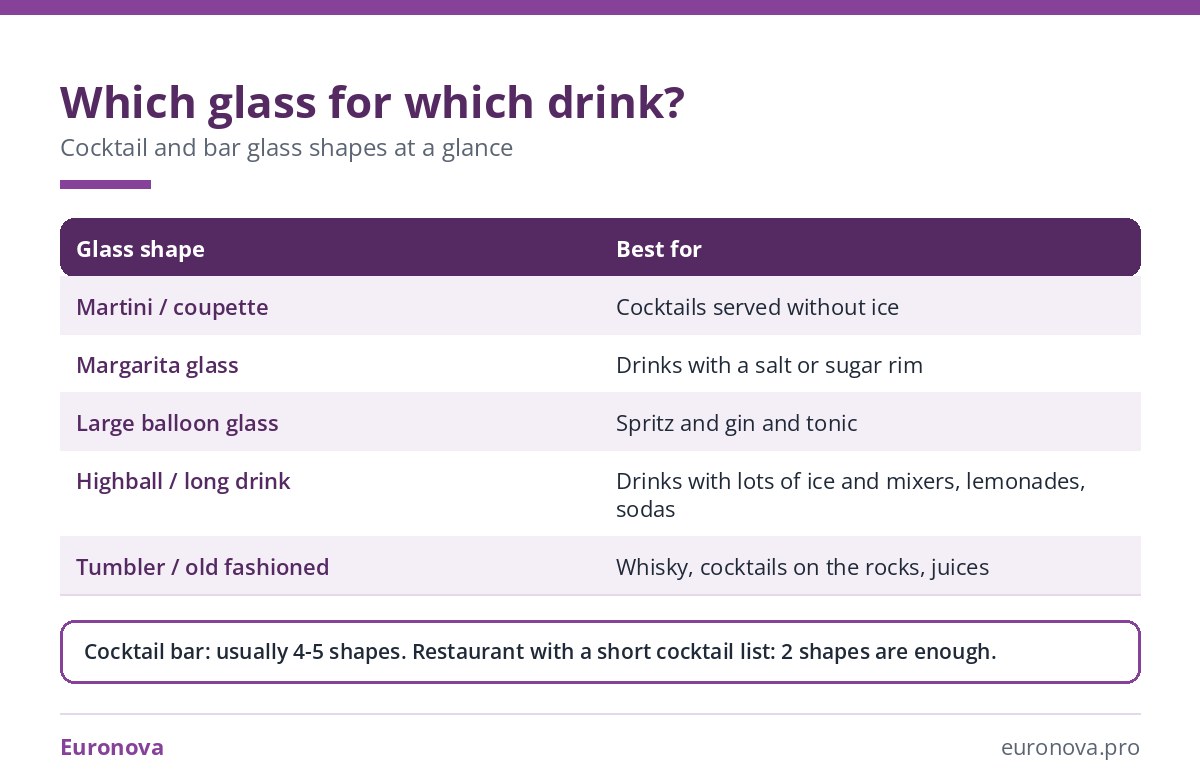
Martini glasses and coupettes are for cocktails served without ice, margarita glasses for drinks with a salt or sugar rim, and large balloon glasses for spritzes and gin and tonics. A cocktail bar usually needs four or five shapes, while a restaurant with a short cocktail list can manage with two.
Jugs, carafes and coupes
Jugs for water and lemonade, carafes for house wine and decanting, and coupes for ice cream and desserts complete the glassware for service. Carafes with a marked volume help when you sell house wine by the quarter and half litre. Coupes come in handy in cafés, ice cream parlours and hotels with a dessert menu.
How to choose glasses for restaurants, bars, hotels and catering
Restaurant
The basics are a water glass, an all-purpose wine glass, a sparkling wine glass and a spirits glass. In a casual dining restaurant, good soda-lime or tempered glass is enough. In fine dining, lead-free crystal for wine genuinely changes the dining experience. Match the glassware to the style of your tableware: simple, classic shapes go with almost any porcelain.
Bar, pub and club
Here durability and pace are what count. Tempered glass, stackable tumblers and heavy bases reduce losses. In clubs, on the dance floor and in beer gardens, polycarbonate or Tritan glassware protects guests and staff from cuts. Glasses with a fill line make it easier to serve drinks in set measures.
Hotel
A hotel needs several sets at once: glassware for the restaurant, bar, rooms, breakfast buffet and conferences. Standardising models across departments simplifies ordering and storage. By the pool and on the terrace, plastic glassware is the practical choice.
Catering and events
In catering, glassware travels, so stackability, durability and transport in racks or crates matter. At outdoor events, plastic is the safest option. If buying large quantities for a single event does not pay off, look into catering equipment hire.
Schools, nurseries and care homes
In canteens, choose thick, stable tempered tumblers or easy-to-grip plastic cups. For young children and older people, low weight and safety matter, so plastic works very well here.
Durability, washing and storing glasses
Even the best glassware quickly loses its looks if the dishwasher is badly set up. The most common problem is cloudiness. Typical causes are hard water without softening, too high a programme temperature and too aggressive a detergent. Before you decide the glass is poor quality, check the dishwasher: salt and softener levels, detergent dosing and temperature. In a venue with hard water, a water treatment unit often pays for itself faster than you might think. Agree the dishwasher settings with your service technician or detergent supplier, as they depend on the model and your local water.
When buying and in daily use, pay attention to:
- The rim: a reinforced rim chips less, and a chipped glass must be taken out of service immediately.
- Stacking: glasses that stack safely save space, but do not stack them wet or hot, as they can jam together.
- Dishwasher racks: wash stemware in compartment racks so the glasses do not touch.
- Thermal shock: do not pour an ice-cold drink into a glass straight out of the dishwasher, and do not put ice into a hot glass.
- Polishing: polish wine glasses with a dry microfibre cloth and hold them by the bowl, not the stem.
- Storage: keep stemware in racks or on overhead bar glass hangers, and tumblers upside down on a clean, well-ventilated surface.
How many glasses to order to start with
The quantity depends on the number of covers, table turnover and how quickly glassware comes back from the wash-up area. Work it out for your own case. Take a 60-cover restaurant where, at peak times, every guest gets a water glass and a wine glass, and the dishwasher returns clean glassware every fifteen minutes. You need glassware for a full restaurant, for the glasses currently being washed, and a reserve for breakages. It is better to order a few dozen extra pieces than to be polishing glasses mid-service on a Friday night.
Two rules always work. First, limit the number of models: fewer types mean simpler washing, easier storage and lower restocking costs. Second, choose glassware from a standard range, not a one-off collection, because in six months you will be reordering the missing pieces.
Commercial porcelain: types and selection
Glassware and tableware create a single look on the table, so choose porcelain on the same principles: the menu, the intensity of use and the ability to reorder.
Plates
- Flat plates are the basis for main courses. Non-standard shapes, such as the Notte 27 × 25 cm flat plate or the elongated Notte 34 × 16 cm plate, help when serving starters, sushi or tasting portions.
- Deep plates for soups, pasta and risottos, for example the Sage hygge 28 cm deep plate or the Gourmet Retro 24 cm deep plate.
- Oval platters for serving fish, meat and sharing dishes, such as the Gourmet 34 × 19 cm oval platter or the 36 cm oval platter.
Cups, mugs and saucers
A café needs cups for espresso, cappuccino and tea, while a hotel needs mugs for breakfast and conferences. Examples include the Sapphire 250 ml mug, 28 cl banqueting mugs and the Gourmet Aqua 19 cm saucer.
Porcelain GN containers
For buffets and hot food service, porcelain gastronorm containers look elegant and fit standard buffet counters. The most commonly used sizes are GN 1/1, GN 1/2, GN 1/3 and GN 2/4.
White, coloured or decorated
White porcelain is the most versatile: it shows off the colours of the food and is easy to reorder. Coloured and reactive glazes build the character of a venue. With decorated porcelain, especially with gold rims or hand painting, washing must follow the manufacturer's instructions, as such tableware requires particular care in the dishwasher. In a high-turnover venue, choose porcelain with thicker, reinforced rims and tableware that can be stacked safely.
Our view on choosing glassware and porcelain
One thing comes up again and again in our conversations with restaurateurs, hoteliers and caterers: the most expensive glassware is the kind you cannot reorder. A venue starts with a beautiful collection, a few months later it is a dozen glasses short, and suddenly there are three different models in service.
That is why we advise starting with a small number of proven, versatile models: a water glass, a wine glass, a beer glass and one or two cocktail shapes. Add plastic where glass gets broken, and porcelain chosen to suit the menu, not the other way round.
We tailor our range to the needs of professional food service and update it continuously. You can order glassware, porcelain, cutlery, disposables and equipment from us in one place at wholesale prices, and then easily top up whatever runs out.
Rok
Glassware and porcelain for your venue
At Euronova you will find glasses and glassware, plates and porcelain, cutlery, kitchen utensils, and storage and transport equipment. We equip restaurants, hotels, bars, pizzerias, cafés, catering companies and contract catering operations.

Browse glasses and glassware at Euronova and put together your glassware and tableware in a single order.
Frequently asked questions
Which glasses should a restaurant start with?
To start with, a water glass, an all-purpose wine glass, a sparkling wine glass, a spirits glass and a beer glass are enough. Choose models from a supplier's standard range so you can easily reorder them. Add specialist glassware as your wine and cocktail lists grow.
How does tempered glass differ from ordinary glass?
Tempered glass is heat-treated, so it withstands knocks and temperature changes better. In practice it chips less and breaks less often in the dishwasher. That is why it is the choice for bars, hotels, canteens and catering.
Why does glassware go cloudy in the dishwasher?
The most common culprits are hard water, too little softener salt, too high a temperature or too strong a detergent. Check your dishwasher settings and ask your service technician to adjust the detergent dosing to your local water. Glass that is already chemically etched usually does not regain its original clarity.
Is plastic glassware suitable for a hospitality venue?
Yes, especially where glass breaks easily: in clubs, beer gardens, by pools, at events and in children's facilities. Polycarbonate is extremely durable, while Tritan looks very similar to glass. Wash both according to the manufacturer's instructions.