Choosing Cocktail Glasses: A Guide for Bars and Food Service
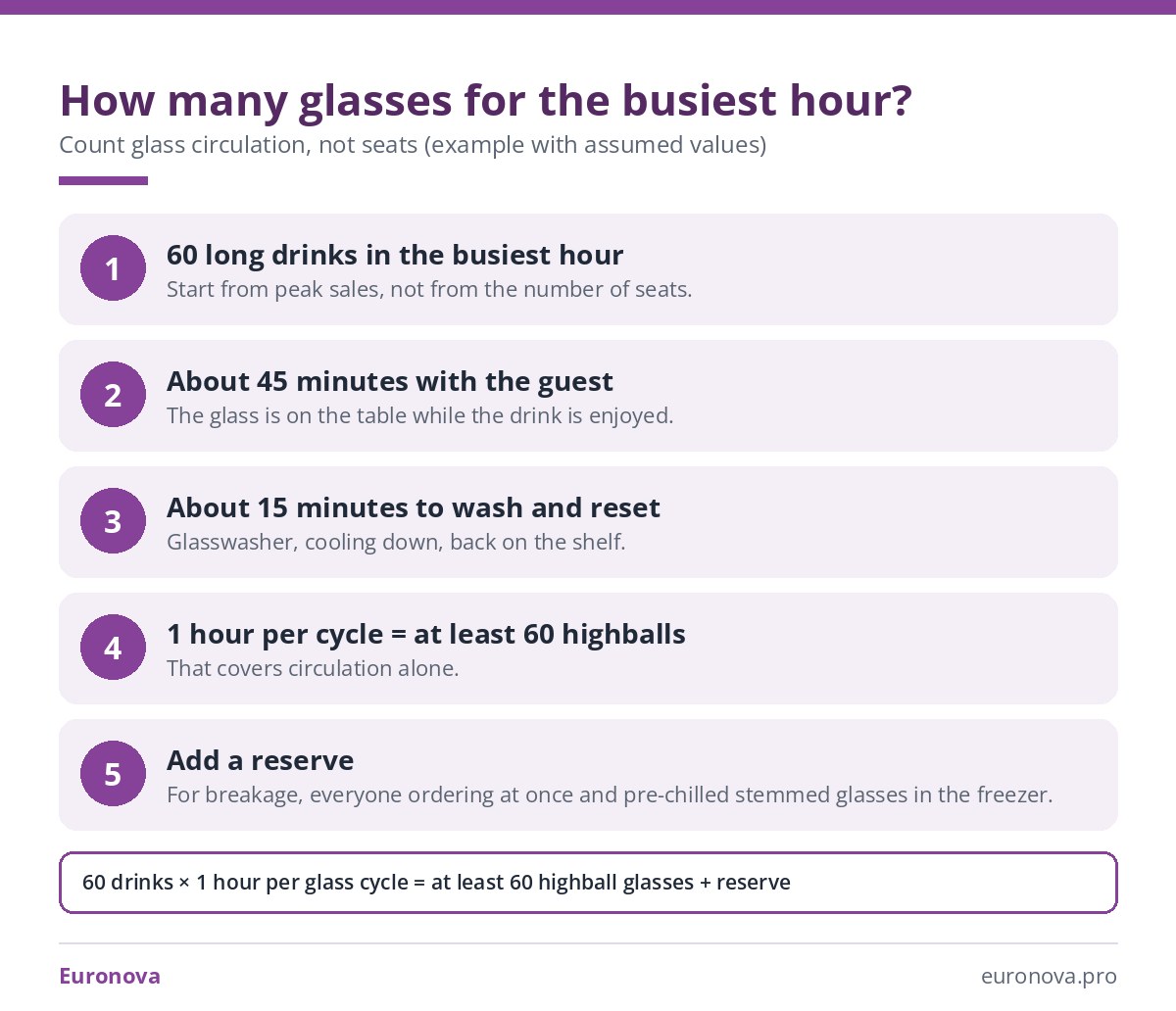
When choosing cocktail glasses for your venue, the decision is not about looks but about three questions: is the drink served with or without ice, how much capacity does it need, and will the glass survive daily life between the bar, the glasswasher and the freezer? With four or five core shapes, a bar can cover almost any drinks menu. The difference then comes from the right size, robust construction and enough pieces for the busiest hour. The safest way to plan this is to source glasses, bar equipment and replacements from one supplier, such as Euronova, where glasses are available to buy and to hire. The most common mistake when buying glassware is to start with the glass. A beautiful set in a catalogue tells you nothing about whether your signature drinks will fit in it. So go through your drinks menu line by line and note three things for each drink: is it shaken or stirred and then served without ice, is it built on ice or topped up with a mixer, and what is the final volume including ice? Groups emerge from this list almost automatically. Glass shape is not decoration: it affects how aromas concentrate, how quickly the drink warms up and how long the carbonation lasts. Slim glasses hold bubbles better, wide bowls open up aromas, and stemmed glasses keep the warmth of the hand away from the drink. In practice this means: a bar with lots of highballs and gin and tonic variations mainly needs tall glasses in large numbers. A cocktail bar serving classics such as the martini, manhattan and sours needs more stemmed glasses and freezer space. A hotel with breakfast, a lounge and banqueting needs shapes that work across several areas. If you know your menu, you will not buy twice. The key distinction in cocktail glassware is simple. Stemmed glasses are for drinks without ice, stemless glasses for drinks on ice or drinks built directly in the glass. The reason is temperature: a martini or daiquiri is stirred or shaken over ice and then strained. In the glass, there is no more ice to keep it cold. The stem stops the guest's hand from warming the drink. Cocktails in stemmed glasses are therefore generally served "straight up", i.e. without ice and without a straw, and the glasses are chilled before serving. In food service they are often kept in the freezer so that a light frost forms when serving. You can also chill them at the bar with ice and a little water while the drink is being made in the shaker or mixing glass. For drinks on ice, the ice does the chilling. Something else counts here: tall glasses give room to the mixer and ice, while short glasses let a concentrated drink develop slowly over a large ice cube. A stable, thick base is a real advantage in these glasses, because ingredients are muddled and stirred in the glass. There are many glass shapes: martini, coupe, Nick & Nora, rocks, highball, Collins, hurricane, copa, flute, margarita and mule mug are among the common types of cocktail glass. For purchasing, what matters is the usual capacities, because every recipe depends on them. The figures for the stemmed glass, tumbler, double old fashioned and highball come from the Serious Eats glassware guide, the Collins and flute data from Cocktail Society, and the drink allocation and copa capacity from Cocktail Magic. Three specialists deserve a sentence of their own. The Nick & Nora is a smaller, deeper stemmed glass used for the martinez and manhattan, and it spills less than a shallow bowl when carried. The margarita glass, with its stepped shape and wide rim, is designed specifically for the margarita; the salt rim is part of the ritual. The flute is tall and narrow so the bubbles last longer, and it suits sparkling wine, champagne, prosecco and champagne cocktails. A note on size: the stated capacity is usually measured to the brim. With stemmed glasses, always allow a gap below the rim so that servers can carry a full tray safely through the room. With highballs and Collins glasses, factor in the ice, which takes up a large part of the glass. You do not need a shelf full of speciality glasses. A professional core set can be reduced to a stemmed glass, an old fashioned glass, a highball or Collins glass and a champagne glass. That covers almost all common cocktails. Models from our range show what this looks like in practice: A principle to start with: stick to one model per shape. Uniform glasses are easier to stack, quicker to reorder and tidier to sort into glasswasher racks. When a glass breaks, you replace it like for like instead of ending up with a mixed collection. The number of pieces decides whether Friday night service flows or the team waits for clean glasses. Do not count seats; count how glasses circulate in the busiest hour. Each glass is either with a guest, in the glasswasher, cooling down or being pre-chilled, or waiting as a reserve. An example with assumed values: your bar sells 60 long drinks in the busiest hour. A glass stays with the guest for about 45 minutes, then needs about 15 minutes to be washed and ready again. So each glass is in circulation for an hour, which means you need at least 60 highball glasses for circulation alone. Add a reserve for breakage and for the moment when everyone orders at once. For stemmed glasses pre-chilled in the freezer, also allow for the stock that sits there permanently. Catering and events follow a different logic: glasses are often not washed at all during the event, and each guest uses several glasses. Here it pays not to buy for peak demand outright. At Euronova you can also hire glasses, plates and cutlery, so you buy a core stock and cover the peaks of large parties with catering equipment hire. In professional use, a cocktail glass is a working tool. It is washed several times a night, comes out of the machine hot, goes into the freezer and onto trays. So pay attention to these points: And a point many overlook: the glass must fit the bar. Before ordering larger quantities, check the height and diameter against your shelves, glass chiller and glasswasher racks. A glass that will not fit in the glasswasher is worthless in a venue. Commercial glasswashers work with fixed rack sizes and a maximum glass height under the door. Tall highballs, large balloons and long stems quickly hit these limits. Before ordering, measure the rack size and the clear door height of the machine and compare them with the glass height on the technical data sheet. In hotels where the bar, housekeeping and banqueting use different wash areas, make this comparison part of standard procedures so that new glasses do not turn out to be a problem in the middle of service. For chilling: stemmed glasses for drinks without ice go into the freezer or are pre-chilled at the bar with ice and water, as described above. Let hot washed glasses cool down first before they go into the freezer, as sharp temperature changes put strain on any glass. Store stemmed glasses upright or hanging in a rack, never nested inside each other unless they are specifically designed for stacking. Glasses for drinks on ice should be within reach of the ice station. You will find suitable tools such as bar spoons, shakers and strainers under cocktail tools. Euronova is an online shop for catering equipment for HoReCa businesses. With us you will find cocktail glasses from small stemmed glasses to large-capacity glasses for signature drinks, unbreakable polycarbonate versions, bar equipment and everything else the bar and kitchen need. The range covers many brands. For events and catering, you can also hire glasses, plates and cutlery from us. Put together your core equipment directly in the Euronova online shop. In our view, choosing glassware belongs at the start of planning, not at the end just before opening. The glass determines how a drink looks, how long it stays cold and how quickly your team can work. Our advice: start with a few shapes in sufficient quantity and buy ranges you can reorder later. A uniform stock is easier to wash, store and replace than twenty individual pieces. Because we sell glassware, cocktail tools, tableware and catering equipment in the same shop, you can equip your bar with a single order. For large events, hire supplements your own stock without you having to buy glasses that sit in the store room for the rest of the year. Rok For drinks served without ice, the coupe is the most versatile, because it takes martinis, sours and champagne cocktails and spills less than a V-shaped glass when carried. For drinks on ice, the highball is the all-rounder. With these two shapes plus a tumbler and a flute, you cover most drinks menus. Highballs usually hold about 300 to 470 ml, Collins glasses about 300 to 410 ml. What matters is that there is enough room for ice as well as the spirit and mixer. A glass of around 45 cl gives you room for generous amounts of ice. Yes, stemmed glasses for drinks without ice should be chilled before serving so the drink does not warm up straight away. In food service they are therefore kept in the freezer or chilled at the bar with ice and water. Where broken glass is a risk, polycarbonate glasses are the practical choice. They look like classic cocktail glasses but do not shatter. For one-off large events, you can also hire glasses from Euronova.Choosing Cocktail Glasses: A Guide for Bars and Food Service

In brief
Contents
Menu first, then glass
Stemmed or not: the basic rule

Key glass shapes and their sizes
Glass shape
Typical capacity
Typical drinks
Served
V-shaped (martini) glass and coupe
approx. 150–210 ml
dry martini, manhattan
without ice, pre-chilled
Old fashioned / tumbler
approx. 180–240 ml
old fashioned, short drinks
on ice
Double old fashioned
approx. 350–410 ml
short drinks over a large ice cube
on ice
Highball / long drink glass
approx. 300–470 ml
gin and tonic, Cuba libre
on ice with mixer
Collins
approx. 300–410 ml
Tom Collins
on ice with mixer
Sparkling wine glass (flute)
approx. 180–300 ml
French 75, mimosa
without ice
Copa / balloon
approx. 600–750 ml
garnished gin and tonic
lots of ice
Core glassware for bars and food service
How many glasses do you really need
Material and build for professional use
Washing, chilling, storage
Cocktail glasses from Euronova

Our view: glassware is an investment in service
Cocktail glasses FAQ
Which is the most versatile cocktail glass?
How big should a long drink glass be?
Should a martini glass be chilled?
Which cocktail glasses are suitable for terraces and events?
Sources
We recommend