Grease-resistant snack packaging: how to choose it and the 2026 rules
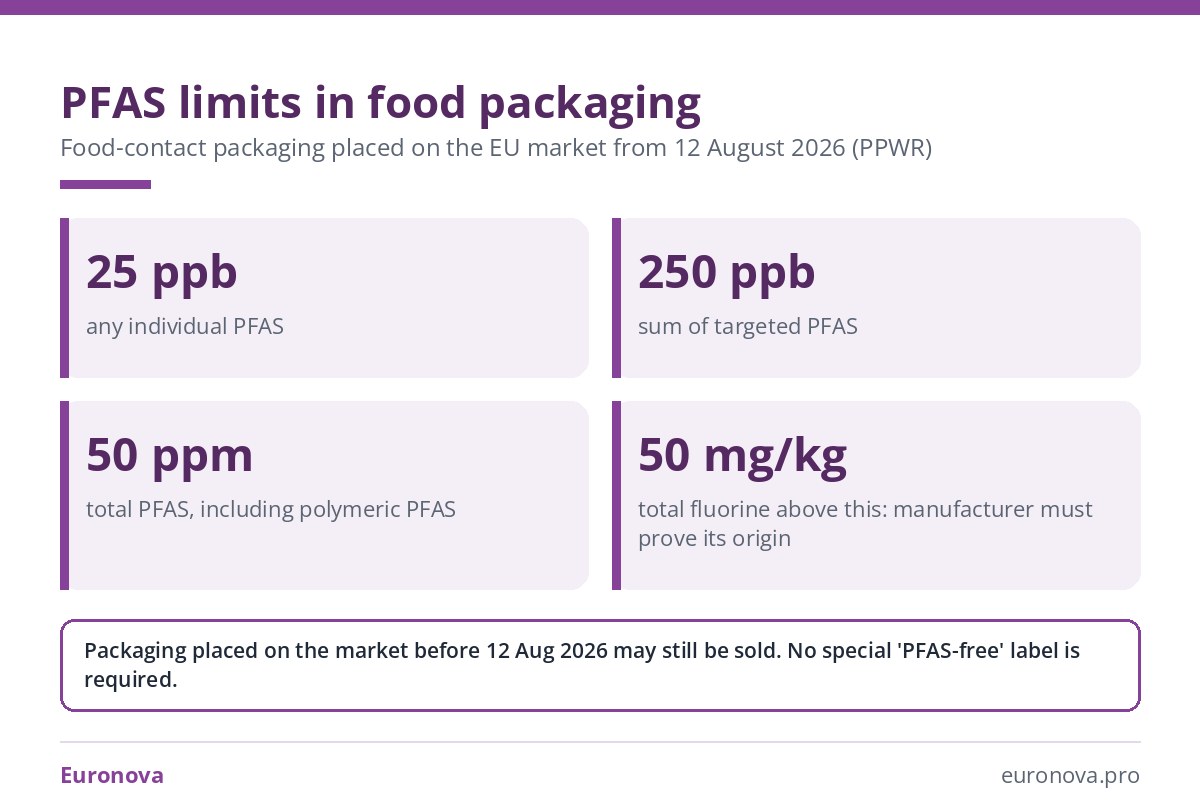
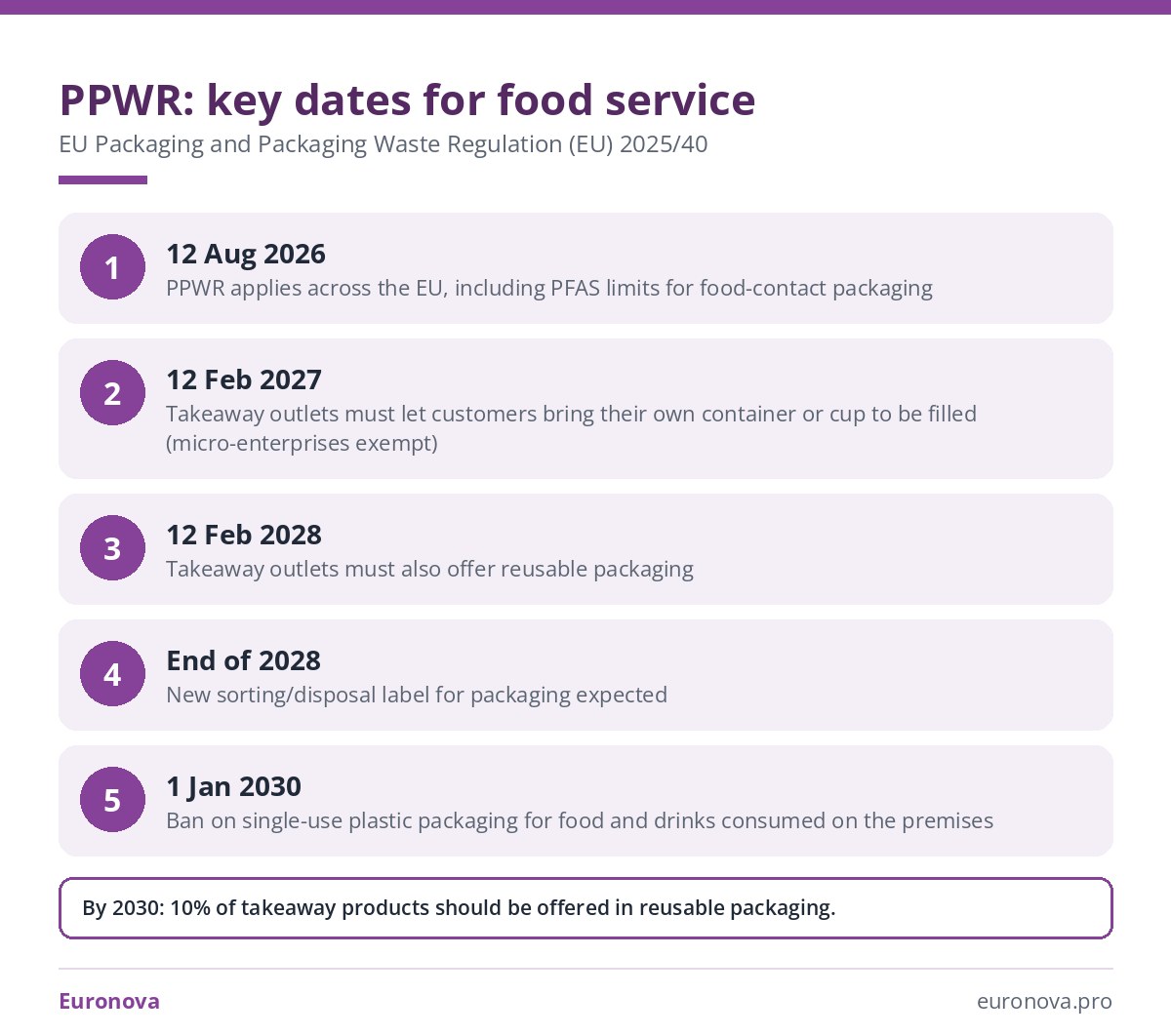
Grease-resistant snack packaging means trays, boxes, bags and papers made of materials that do not let oil and fat through: the chips stay in the tray, the burger stays in its wrap and the guest's hands stay clean. For your business, three things decide the right choice: the dish (fried, with sauce, cold or hot), the material's barrier, and the legal framework, which tightened considerably on 12 August 2026. If you clarify these three points before ordering and source the right range from a single supplier, you save on complaints, waste and trouble with inspections. That is exactly why we have set up dedicated categories of takeaway food packaging at Euronova. Ordinary paper is a network of cellulose fibres full of tiny voids. Grease creeps through these capillaries, the fibres soak it up, and after a few minutes the familiar dark stain appears on the outside. With a bag of chips this is not just a cosmetic problem: soaked board loses strength, the bag tears and the grease ends up on clothes, car seats or delivery backpacks. Grease-resistant materials block exactly this path. There are basically two approaches: This fluorine-based treatment was the standard for a long time. Today, manufacturers increasingly use water-based barriers, dispersion coatings or naturally dense materials such as bagasse, aluminium or plastic. For your business this means grease resistance is a property of the material and its treatment, and today it can be achieved in several ways without the packaging going soggy in the guest's hands. The best barrier is of little use if the packaging format does not suit the dish. Fried food needs air so that steam can escape and the coating stays crisp. Dishes with sauce, on the other hand, need a tight container with a reliable lid, especially for delivery. For small portions, dips or finger food at catering events, sturdy pots work well, such as our finger food pot 180 ml or the larger 250 ml version. If you serve eat-in customers at a takeaway, combine greaseproof paper with a robust tray such as the fast food tray 35 × 26 cm in red, which is also available in blue and as a large tray 43 × 36 cm. For oven dishes, bakes and catering portions delivered hot or reheated, aluminium packaging is the logical choice: aluminium is naturally impermeable to grease and liquids and retains heat well. The colour mainly tells you about the pulp, not the grease barrier. Brown paper is usually made from unbleached sulphate pulp (kraft), white from bleached pulp. Both are available in grease-resistant versions. The decision is therefore mostly a question of presentation: More important than colour are the technical data on the data sheet: suitability for fatty foods, grammage (heavier paper is more tear-resistant) and whether the paper is suitable for hot food. You will find our range of wrapping and food papers in the category films, food paper and rolls. Besides the barrier, three practical points decide whether packaging works day to day: Size: the packaging should match the portion. A box that is too big lets chips slide around and cool down; one that is too small gets overfilled and will not close. Define fixed packaging for each portion size on the menu, and your costing will be clear too. Strength: hot, moist dishes put more strain on board than cold ones. For dishes with sauce or a lot of weight, such as gyros with sides, a meal box with a rigid rim is worth it. For light snacks, a thinner bag is enough. Closure: for delivery, the lid must hold even if the box tips over in the backpack. Standard solutions are clamshell boxes with tabs, containers with push-on lids and folding boxes with a lock. For street food, where the guest eats straight away, an open tray is often more practical. A tip from practice: plan with your actual portion, not an average size. The currywurst from your kitchen has a different amount of sauce than your competitor's, and a 20-minute delivery requires more strength and a firmer lid than counter sales. You will find a wide range of paper and board trays, boxes and bags in the category paper and cardboard packaging. A lot has changed for food service businesses in 2026. Here are the key points in brief, without the legal jargon. PFAS are per- and polyfluoroalkyl substances that were used for decades in grease-repellent treatments. Since 12 August 2026, limits under Regulation (EU) 2025/40 on packaging and packaging waste have applied to food-contact packaging across the EU: 25 ppb for any individual PFAS, 250 ppb for the sum of targeted PFAS and 50 ppm for total PFAS, including polymeric PFAS. If total fluorine exceeds 50 mg/kg, the manufacturer must prove where it comes from. The regulation does not require any special label for PFAS-free packaging. What does this mean for you? Compliance is primarily the manufacturer's responsibility. As a food business, however, you need to know which packaging you use and keep its documentation to hand. Check your grease-resistant paper packaging in good time and ask your suppliers for proof of compliance. The EU Packaging and Packaging Waste Regulation, PPWR for short (Regulation (EU) 2025/40), has applied directly in all member states since 12 August 2026. It brings sustainability requirements, an obligation to label the correct disposal route and extended producer responsibility. The new disposal label is expected to be introduced only from the end of 2028, but the PFAS restriction matters right away. Manufacturers document the compliance of their packaging in an EU declaration of conformity. National rules on packaging and packaging waste are being aligned with the regulation. Two roles are distinguished: the packaging manufacturer is responsible for its compliance, while whoever places the packaging on the market bears extended producer responsibility for packaging waste. If you are unsure what role your business plays in a particular case, for example if you print packaging with your own logo, check with your national chamber of commerce or an environmental law specialist. Apart from the framework Regulation (EC) No 1935/2004, there is no specific harmonised EU regulation for paper and board in contact with food. The recommendations of the German Federal Institute for Risk Assessment (BfR), especially Recommendation XXXVI, are therefore widely used as a recognised industry benchmark. The BfR is gradually updating these recommendations. When buying, the statement “suitable according to BfR XXXVI” on the data sheet is a good indicator. Environmental claims on packaging are an important selling point, especially if your guests pay attention to them. To understand the claims correctly: For businesses that want a sustainable takeaway offer, we have created a dedicated category of eco-friendly packaging. This way you find sustainable trays and boxes in one place and can keep your range consistent. Before you order grease-resistant snack packaging, go through these points. The first time takes an hour, but later saves a lot of reordering. The last point is often underestimated. If you order packaging from one retailer, cutlery from another and trays from a third, you manage three deliveries, three invoices and three minimum order values. At Euronova you will find snack packaging together with everything a takeaway business needs: trays and boxes made of paper and board, aluminium packaging, food paper, single-use cutlery and fast food trays, all in one order. Browse our range of disposable products and put together your takeaway supplies in a single order. Our range serves restaurants, hotels, cafés, pizzerias, caterers and professional kitchens, and for all of them the same applies to packaging: packaging is part of the dish. If the chips reach the guest soggy or sauce seeps through the box, the disappointment lands with you, not with the packaging manufacturer. That is why we recommend not treating packaging as an afterthought at the end of the costing. If you define the right format for each dish, order consistently and keep your documentation in order, you are also well prepared for the new rules from August 2026. Our range is built so that you can source packaging, food paper, cutlery and trays in one step. Multilingual catalogues, European language versions and expert articles help you find the right products quickly, even if your team comes from different countries. Rok No. Greaseproof paper holds back oil and fat and is designed for wrapping and serving. Baking paper is additionally designed for high oven temperatures and has its own requirements. For burgers, wraps and takeaway pastries, greaseproof wrapping paper is sufficient. Since 12 August 2026, PFAS limits for food packaging have applied across the EU. Packaging that exceeds these limits may no longer be placed on the market. Check your remaining stock against the manufacturer's information and clarify any doubts with your local enforcement authority. An open or vented format, such as a chip scoop or a snack box with air holes. This lets steam escape so the chips do not go soggy. Closed boxes are better suited to dishes with sauce. That depends on the packaging composition and how soiled it is. Clean paper and cardboard packaging generally goes in the paper bin, while composite packaging with plastic goes with packaging waste. Your local waste collection provider decides which rule applies in your area, and the marking on the packaging helps with sorting. The EU declaration of conformity is issued by the packaging manufacturer. As a food business, however, you should keep the documentation for your packaging to hand so you can provide information during an inspection. If you design or print packaging yourself, your role may change, so it is worth asking your chamber of commerce or an environmental law specialist.Grease-resistant snack packaging: how to choose it and the 2026 rules

In brief
Contents
What makes packaging grease-resistant
Which packaging suits which dish
Dish
Suitable packaging
What to watch
Chips, potato wedges, nuggets
chip scoop, snack box, paper bag
open or vented format so steam can escape
Burger, sandwich, wrap
greaseproof wrapping paper, burger box
paper large enough to wrap completely
Currywurst, gyros, bowls
meal box made of board, bagasse or aluminium
strength with hot sauce, tight lid
Pizza, flammkuchen
board box with a greaseproof insert
liner that keeps oil away from the base
Finger food, dips, sauces
small pots with a clear capacity
portion size matched to the menu
Pastries, doughnuts
greaseproof paper bags
stains must not show through on the outside
Food eaten on the premises
fast food tray with a paper liner
wipe-clean tray, a fresh liner for each guest
Brown or white greaseproof paper?
Size, strength and closure
Legal requirements for grease-resistant packaging in 2026
PFAS: new limits from August 2026
PPWR: new rules for all packaging
Recommendations for paper and board
Compostable or recyclable: reading the claims correctly
Purchasing checklist
Snack packaging and supplies at Euronova

Our view on grease-resistant packaging
Frequently asked questions
Is greaseproof paper the same as baking paper?
Can I still use packaging with a fluorinated coating?
Which packaging keeps chips crispy the longest?
Do greasy cardboard trays go in the paper recycling?
Do I need a declaration of conformity as a takeaway business?
Sources
We recommend