Cake and pastry packaging for cafés and catering: choice, rules, buying
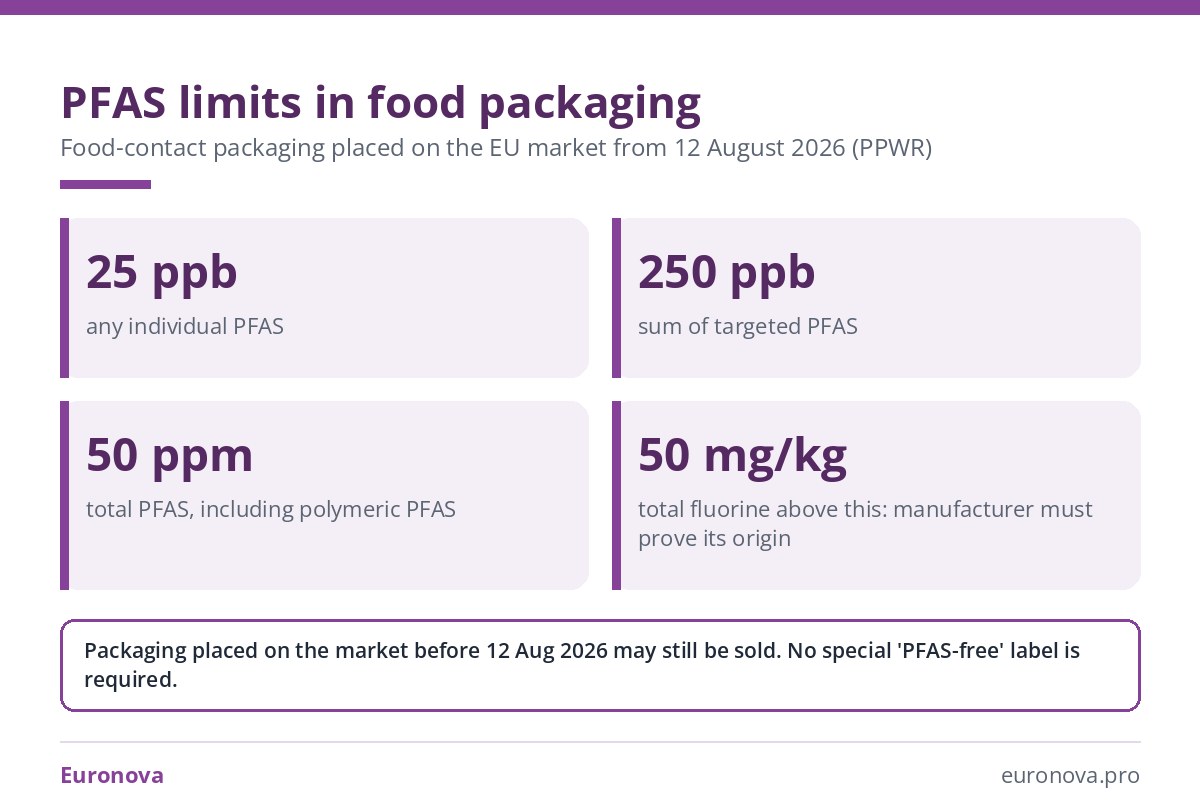
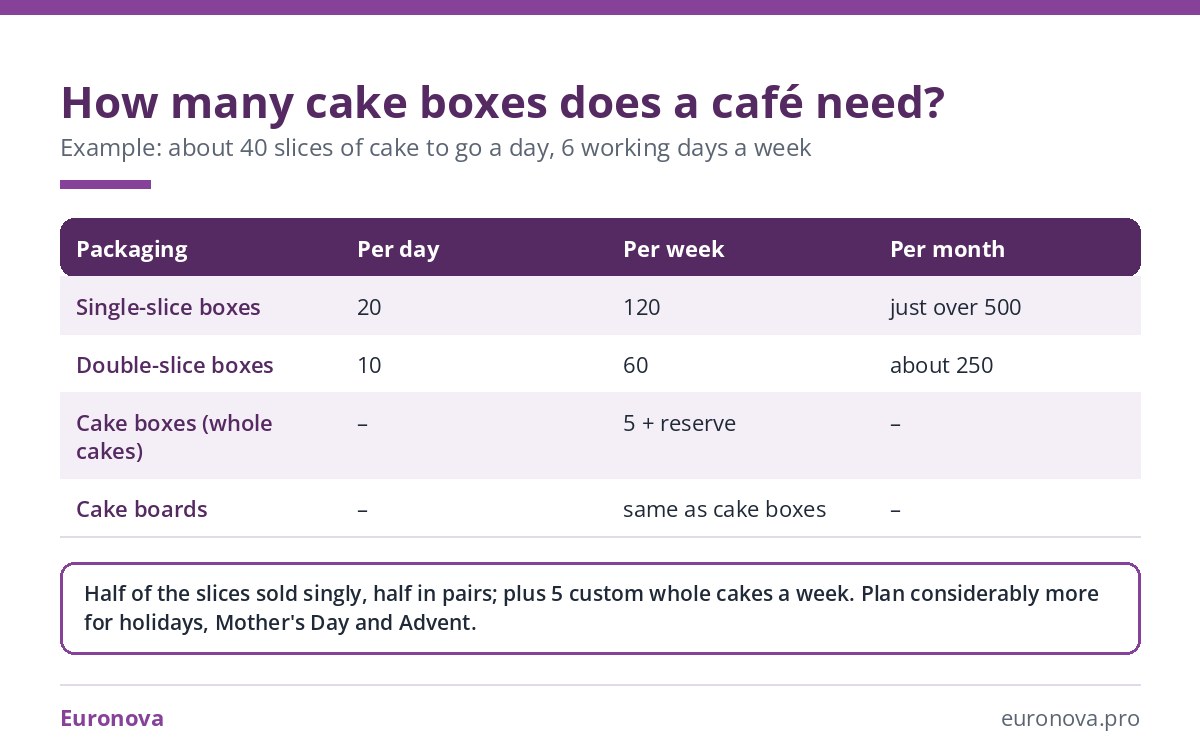
A slice of cheesecake to go, a custom birthday cake, a pastry buffet for 120 guests: each of these needs its own packaging. So if you buy for a café, hotel or catering business, you are not simply looking for “a cake box”. You need a small system of cake boxes, slice boxes, pastry bags and transport containers that fits your range, meets hygiene rules and is quick to grab in daily service. It is best to buy this system together from a specialist catering equipment supplier, along with disposables, transport containers and serving equipment. That keeps sizes, materials and reorders consistent. This guide shows which packaging suits which cake, which rules apply in 2026 and how to plan your requirements properly. The most important question when buying is not “cardboard or plastic?” but: what exactly goes over the counter? A cream cake has different requirements from a slice of marble cake or a bag of biscuits. The overview below matches common products in day-to-day food service with suitable packaging formats. For cafés, a basic set of two cake box sizes, one slice box and one pastry bag is often enough. Patisseries with custom cakes need more sizes and taller boxes. Caterers and hotels think more in terms of transport containers and trays, because they rarely sell individual slices over the counter and instead send whole trays to the banqueting hall. Every material has its place. Three properties are decisive: how rigid is the packaging, how well does it hold back grease and moisture, and how is it disposed of? Cardboard is the standard for cake boxes and slice boxes. It can be stored flat, is rigid, stacks well and can be printed, for example with a logo on the outside. Kraft board looks natural and suits cafés that deliberately go for an unbleached look. For greasy or moist cakes such as fruit cakes, cheesecakes or buttercream cakes, the inside should be grease-resistant or a liner should take the direct contact. Cardboard goes in the paper recycling as long as it is not heavily soiled. Paper bags are the fastest solution for dry pastries: croissants, biscuits, slices of sponge cake. They take up little space and are filled at the counter in seconds. For iced or sugar-glazed pastries, bags with a grease-resistant inner layer are suitable. Important: the food-contact side must be unprinted. More on this in the section on the rules. Clear packaging shows the product without the customer having to open it. This is a selling point above all in display counters and self-service chiller cabinets. It protects well against moisture and pressure and can be sealed tightly. Cardboard boxes with a window combine the best of both: the rigidity of cardboard and a view of the product. For traybakes, strudel or desserts in larger quantities, shallow containers with lids are practical. Aluminium trays keep their shape, stack well and withstand both chilling and reheating, for example of apple strudel. At catering events you can put them straight on the buffet or transfer the contents on site. Most complaints about takeaway cakes have nothing to do with the material but with the format. These points decide whether a cake is still fit for sale after a ten-minute car journey. A quick test saves trouble later: before switching to a new box size, pack a typical cake from your range and carry it once through your premises, including the stairs. If the slice is still standing straight, the size is right. Cake packaging is a food contact material. The same basic rules therefore apply to it as to tableware, chopping boards or transport containers. Under the framework Regulation (EC) No 1935/2004, materials that come into contact with food must be manufactured so that they do not transfer constituents in quantities that endanger health and do not change the taste or composition of the food. For your business this means: only use packaging for cakes that is expressly intended for food contact. You can recognise it by the wording “for food contact” or the glass-and-fork symbol. For a professional kitchen, Regulation (EC) No 852/2004 on the hygiene of foodstuffs and your HACCP system are also central. Equipment and articles must be hygienically sound. This also applies to the storeroom where your packaging is kept. In its guide to handling food (as of January 2025), the Baden-Württemberg Ministry of Rural Affairs summarises rules that apply directly to cakes: The last point is crucial for catering and pastry buffets. Plan cream cakes so that they come out of refrigeration as late as possible, and keep quantities on the buffet manageable. Anything that has stood at room temperature does not go back into the cold room. As a general hygiene rule, keep chilled food at 5 °C or below. For questions about your specific hygiene concept, your local food safety authority is the right point of contact. Packaging rules have shifted considerably over the past two years. The basis is Regulation (EU) 2025/40 on packaging and packaging waste (PPWR), which is coming into force in stages. PFAS are so-called forever chemicals that used to be widely used in grease- and water-repellent paper and board packaging. According to the European Commission guidelines on the Packaging Regulation, from 12 August 2026 food-contact packaging containing PFAS at or above 25 ppb for any individual substance, 250 ppb as a sum, or 50 ppm including polymeric PFAS may no longer be placed on the market. Packaging placed on the market before that date may continue to be sold. This matters for cake packaging because greaseproof papers, pastry bags and slice boxes are exactly the products that may be affected. When buying grease-repellent paper and board products, look for food-contact information and keep it in your documentation. Under the SUP Directive (EU) 2019/904, EU member states must achieve a measurable reduction in the consumption of single-use plastic cups for beverages and food containers by 2026 compared with 2022. National measures often apply to food and drink outlets as well. A cardboard box for a slice of cake is not a plastic product, but the takeaway coffee cup next to it usually is. With the PPWR, obligations are expanding. According to an information paper by Deutsche Umwelthilfe: Whether individual bakery products count as “ready meals” depends on how they are classified in each case. If you sell cakes, desserts and drinks together for takeaway, plan part of your range with reusable packaging in good time. For a binding interpretation for your business, contact your chamber of commerce or an environmental law specialist. Good packaging is of little use if it gets damp in the cellar or arrives crushed at a catering event. This routine has proven itself in practice. Individual boxes are not enough for deliveries and catering. Transport crates in which boxes and trays stand firmly, and insulated containers for chilled cakes, make sense. In our range for food transport and containers you will find containers suitable for this use. Always transport cakes flat, ideally on the car floor or on a non-slip surface, never on a seat. On the buffet, a cake stand with dome protects the cake from dust and insects while meeting the requirement that food is displayed covered. Clean cardboard and paper go in the paper recycling, aluminium trays and plastic packaging with packaging waste. Heavily soiled packaging with cream or buttercream residue goes in general waste. If you have packaging printed with your logo and place it on the market, also check your obligations regarding packaging waste. Packaging is a consumable that always runs out at the wrong moment. A simple example shows how to estimate your requirements. On a normal day, a café sells about 40 slices of cake to go, roughly half individually and half in pairs. On top of that come five whole custom cakes a week. This gives: Per month, that is just over 500 single boxes and about 250 double boxes. Plan considerably more for holidays, Mother's Day and Advent. If you buy napkins, cups and cleaning products at the same time, you combine your order into a single delivery. At Euronova you will find paper and cardboard packaging and the full range of takeaway food packaging in the same order as tableware, cutlery, transport containers and kitchen utensils. For traybakes and desserts at catering events, a good choice is the oval aluminium tray 35 × 24 cm in packs of 25. For events, you can also hire plates, glasses and cutlery from us instead of buying them. Cake packaging is often treated as the item ordered last. Yet it is the last thing your guest sees of the cake before unpacking it at home. A cake that arrives level and undamaged is the best recommendation for your business. That is why we recommend buying cake packaging not separately but as part of your overall equipment: boxes, transport containers, cake stands, serving platters and cleaning products from one range. That way sizes match, reorders run on one schedule, and you can follow new packaging requirements in one place. With expert articles, product catalogues and European language versions, we aim to make exactly this planning easier for business buyers, from a café with a display counter to a hotel with a banqueting operation. Rok Yes, but the print belongs on the outside. Paper must not be written or printed on the side that touches the food. If you place printed packaging on the market yourself, also check your obligations regarding packaging waste. A cardboard cake box is not a single-use plastic product. However, the EU Packaging Regulation brings new obligations for takeaway food and drinks from February 2027 and 2028, which may also cover part of a pastry range. Cakes with uncooked fillings such as whipped cream or buttercream must be kept chilled. Once taken out of refrigeration, they must not be sold or chilled again. So only take out as much as you will sell or serve soon. According to European Commission guidance, packaging placed on the market before 12 August 2026 may continue to be sold. Food packaging newly placed on the market must meet the PFAS limits. For most cafés, two sizes of cake box, one single-slice box, one double-slice box and pastry bags are enough. If you offer custom cakes with tall decorations, add boxes with a raised lid.Cake and pastry packaging for cafés and catering: choice, rules, buying

In brief
Contents
Which packaging suits which cake
Product
Suitable packaging
What matters
Whole cake (cream, buttercream, fondant)
cake box with lid or hinged box, with a cake board underneath
enough internal height, rigid base, carried flat
Slice of cake, cheesecake, slice of tart
cardboard slice box, ideally with a window, or clear box
slice must not topple, lid must not touch the surface
Sponge cake, bundt cake, loaf cake
folding box or cake-shaped carton
crumbs and grease stay inside the box
Traybakes for catering
shallow container with lid, e.g. aluminium or cardboard
stackability, cut resistance, easy portioning
Small pastries, biscuits, croissants
paper bag, cone bag or small folding box
dry pastries, fast counter sales
Cupcakes, muffins
box with an insert for individual cavities
topping stays intact, nothing slides
Pastry buffet, hotel breakfast
cake stand with dome, platters, transport containers
presentation and protection from dust and insects
Materials compared: cardboard, paper, clear packaging, aluminium
Cardboard and kraft board
Paper, glassine and cone bags
Clear boxes
Aluminium and catering trays
Size and shape: so the cake arrives intact
Hygiene and food contact: what applies
EU framework regulation for food contact
Practical rules from official hygiene guidance
Packaging rules 2026: PFAS, reuse and takeaway
PFAS limits from August 2026
Single-use plastic and reusable packaging
What 2027 and 2028 will bring
Storage, transport, disposal
Storing packaging
Transport to customers and events
Disposal
Planning requirements: example calculation
Cake packaging and catering equipment in one place

Our view: packaging is part of the product
Frequently asked questions
Can we print our logo on cake boxes?
Do the reusable packaging rules also apply to takeaway cakes?
How long can a cream cake stand without refrigeration?
Can I still use older cake packaging after the PFAS deadline?
Which sizes should a café keep in stock as a minimum?
Sources