How to Equip a Café: Complete Checklist from Bar to Back of House
How to Equip a Café: Complete Checklist from Bar to Back of House
You equip a café in five zones and in this order: first the menu, then the bar with espresso machine and grinder, then cups and glassware matched to your drinks, then a back of house that meets hygiene requirements, and finally the seating area and furniture. This order protects your budget, as the menu decides how many cups, glasses, dessert plates and containers you really need. Below you will find an equipment list for each zone, bar counter dimensions, hygiene requirements, the main cost items and practical rules that help you avoid shortages in your first week of trading.
Euronova
euronova.pro
Equip your café in one place
Find bar equipment, tableware, glassware and kitchen utensils designed for food service businesses.
Start with the menu. Every item on the menu means a specific appliance, tableware and storage space. A short menu means a shorter shopping list.
The bar is the heart of the venue. An espresso machine, a grinder with adjustable grind, a milk fridge, a sink and a commercial dishwasher are the basics.
Buy tableware by range. One line of cups, plates and glasses makes replacing breakages easier and keeps tables looking consistent.
Plan the back of house around hygiene requirements. Hand wash basin, double sink or dishwasher, temperature-controlled refrigeration and FIFO storage.
Plan your budget with a reserve. The biggest items are the espresso machine, furniture and back of house, while tableware and consumables are bought throughout the life of the business.
Start with the concept and menu, not the catalogue
The most common mistake when opening a café is buying "just in case". You buy a blender because it might be useful for smoothies, a waffle maker because guests like waffles, and three types of glasses because they look nice. A few months later, half of these things sit in a cupboard, and on Saturday morning you run out of cappuccino cups.
So write the menu first. A typical café, as described in the Polskie ePłatności guide, combines espresso classics (espresso, cappuccino, latte, filter coffee), iced drinks, teas, plant-based milk drinks, smoothies, fresh juices and snacks: cakes, biscuits, sandwiches, salads or quiche. You do not need everything. A menu works well when items share ingredients and equipment: espresso, cappuccino, flat white and latte use the same machine, grinder and milk, and differ only in the cup and the ratios.
Next to each item on the menu, note three things:
The appliance you will make it on (espresso machine, blender, toaster, convection oven).
The tableware you will serve it in (80 ml cup, 250 ml mug, latte glass, dessert plate, takeaway cup).
How the ingredients are stored (fridge, freezer, GN container, dry store).
From a table like this, the shopping list almost writes itself. It also shows immediately whether you are buying special equipment for a single slow-selling item.
The second parameter is the size of the venue. According to the faktura.pl guide, the optimum area for a café is 40–80 m², which accommodates the bar, tables, back of house and toilet. In a smaller venue every element of the bar has to do double duty, while a larger one needs more tableware and a second workstation.
Bar area: equipment and workstation dimensions
The bar is where you earn the most and where chaos arises most easily. As GoPOS notes in its café equipment overview, the basics are a commercial espresso machine, ideally one that can make two coffees at once, a grinder with adjustable grind size, a milk fridge, a blender for cold drinks, a sink with running water and a commercial dishwasher.
Espresso machine and grinder
A lever or portafilter machine gives baristas full control over extraction and suits venues focused on specialty coffee quality. A bean-to-cup machine works where speed and consistency count, for example in a café next to an office building or at a petrol station. When choosing the number of groups, look at peak trade, not the daily average: if you have a queue in the morning, one group will quickly become a bottleneck. Choose the grinder to match the machine and the number of blends you want to serve. With two coffees (e.g. an espresso blend and decaf), you need two grinders.
Barista tools
These small items affect the pace of work more than you might think:
milk frothing jugs in two or three sizes, several of each,
tamper, tamping mat and knock box for used grounds,
barista scales and a milk thermometer,
tools for alternative brewing methods (drip, Chemex, AeroPress) if they are on the menu,
syrup pumps, microfibre cloths in separate colours for the machine and the counter,
sugar bowls, stirrers, napkins.
An experienced barista always has warm cups on the machine and a clean bar, so plan space for a cup warmer or the shelf on top of the machine.
Bar counter dimensions
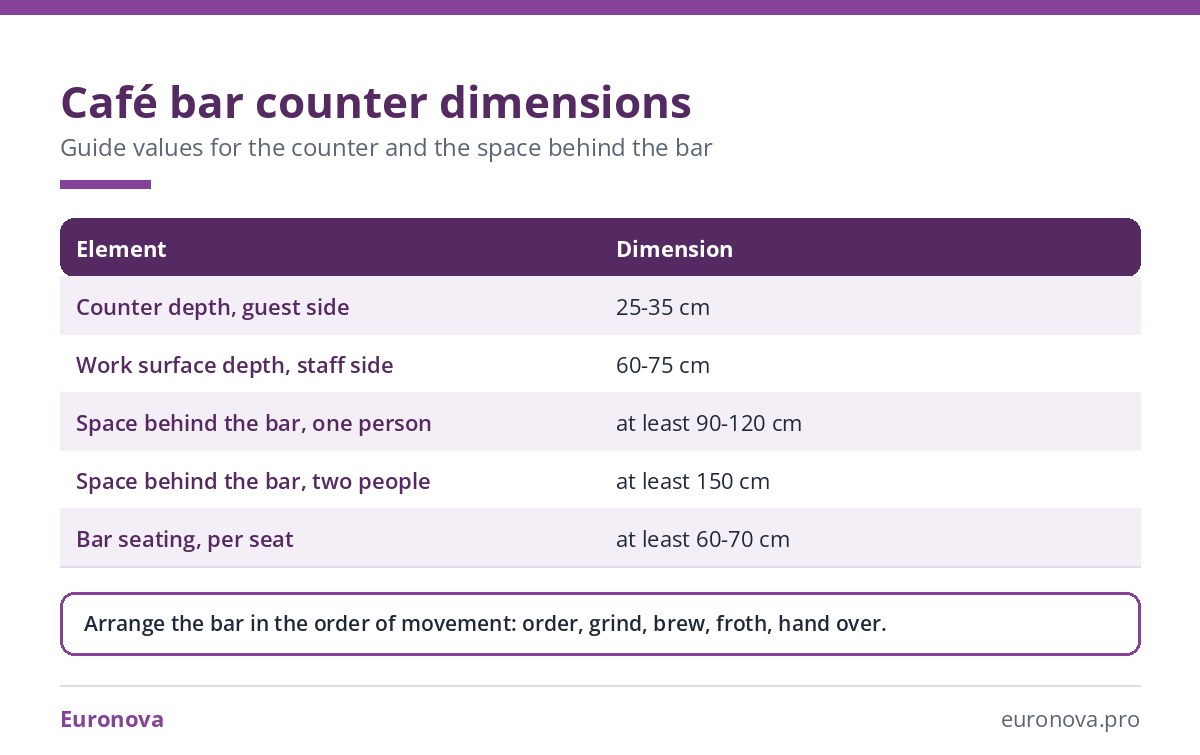
Dimensions are something you cannot fix after installation. According to a guide to bar dimensions, the counter on the guest side is usually 25–35 cm deep, and the work surface on the staff side 60–75 cm. The working space behind the bar should be at least 90–120 cm wide, and at least 150 cm with two people behind the bar. If guests sit at the bar, allow at least 60–70 cm per seat.
The working area needs to fit the sink, undercounter fridges, espresso machine with grinder, tableware drawers, bins, ice machine (if you serve iced drinks) and space for the till. Arrange them in the order of movement: order, grind, brew, froth, hand over.
Café tableware, glassware and cutlery
This is a category that is easy to underestimate, yet it is what guests hold in their hands throughout their visit. Good commercial tableware must withstand hundreds of dishwasher cycles, daily knocks and rapid temperature changes.
A practical rule we recommend to our customers: count your seats and, for each type of tableware, add a reserve for the time when some pieces are in the dishwasher and some on the tables. With busy trade, a reserve for two to three full table turns lets you work calmly without washing up "right now".
For outdoor seating, it is worth considering plastic glasses that do not break on tiles, such as the Prisma 38 cl polycarbonate glass.
Display case, refrigeration and small kitchen
A café with only an espresso machine quickly loses guests to venues with a broader offer, so most owners add desserts and snacks. According to GoPOS, the basic set also includes a refrigerated display case for cakes and desserts, a toaster or sandwich and panini grill, and a blender.
Then there are the things you only think of at the first delivery:
a fridge and freezer in the back of house, separate from the undercounter fridge at the bar,
If you bake on site, add a convection oven, baking trays, moulds and pastry tools. If you buy cakes from a patisserie, a good display case and portioning knives are enough.
Back of house and hygiene requirements
Back-of-house equipment is largely a response to hygiene requirements. The European Regulation (EC) No 852/2004 on the hygiene of foodstuffs requires the layout of premises to permit adequate maintenance, cleaning and disinfection and to provide adequate working space. During an inspection, food safety authorities check the areas of good hygiene practice: functional layout, machines and equipment, washing and disinfection, water supply, waste, pest control, and staff training and hygiene.
bar and drinks preparation with a hand wash basin with hot water,
service counter with a refrigerated display case for desserts,
dishwashing: dishwasher or double sink,
storage: dry goods, fridge, freezer,
cleaning store for cleaning products,
staff facilities: changing room or lockers and a staff toilet.
The same document points to the FIFO principle (first in, first out), labelling opened packs with the date of opening, and storing roasted coffee in sealed valve bags in a dry place away from light and heat. Coffee is not ground in advance. So for the store, buy lidded containers, date labels and shelving that lets you arrange stock in date order.
Plan the formalities alongside your purchases. A food business must be registered with the competent food safety authority before it starts trading, so allow enough time before your planned opening, and the inspector will assess the premises once they are already equipped. If you are not sure whether the back-of-house layout will comply, have the plan checked by a food hygiene specialist or your local food safety authority before ordering stainless steel furniture.
Seating area, furniture and atmosphere
Furniture decides how long guests stay. Large, soft armchairs encourage long stays with a laptop or a book, while high stools and small tables encourage faster turnover. Choose the model that fits your economics: a café by a station earns from turnover, a neighbourhood café from regulars who stay for a second coffee and a slice of cake.
A few rules that make the staff's job easier:
tables with easy-wipe tops and no gaps where crumbs collect,
aisles wide enough that you do not bump into guests with a tray,
some seats with access to power sockets for remote workers,
a self-service station with water, napkins and sugar to take pressure off the bar,
warm lighting in the seating area and bright task lighting over the bar.
Takeaway and outdoor seating
In many cafés, coffee to go is a significant share of sales, so treat it as a separate product line. You need cups in two or three sizes with matching lids, cup carriers, stirrers, cup sleeves, containers for cakes and sandwiches, and bags. You will find the full selection in the disposables category, including food wrapping paper and till rolls.
Choose the takeaway cup size based on your menu recipes: if you make a latte in 300 ml, a 350 ml cup gives you room for the foam and safe carrying.
How much does café equipment cost
Costs depend on size, standard and how many appliances you buy new. The largest items are usually the commercial espresso machine and grinder, furniture and decor, and kitchen and back-of-house equipment. The espresso machine is often the largest single investment, and prices vary widely between bean-to-cup and traditional machines, between single and multi-group models, and between new and refurbished equipment.
When planning your budget:
Separate one-off and ongoing costs. You buy appliances and furniture once, but you keep buying tableware, glassware, cutlery and disposables throughout the life of the venue.
For ongoing costs, trade price and availability count. The same range must be available for future orders too, otherwise your tables will look mismatched after a few seasons of breakages.
Get current quotes. Equipment prices change every year, so compare current offers from several suppliers before buying.
Plan a reserve. Cafés that open on too tight a budget often spend the first months looking for money for missing small items.
Café equipment checklist
Zone
Equipment
Bar
espresso machine, grinder, undercounter fridge, milk jugs, tamper, knock box, scales, blender, ice machine, till or POS terminal
tables, chairs, lighting, self-service station, water carafes
Tableware
espresso and cappuccino cups, mugs, glasses, plates, bowls, cutlery
Kitchen
toaster or contact grill, boards, knives, utensils, GN containers
Dish room
commercial dishwasher or double sink, racks, drainers
Storage
shelving, fridge, freezer, lidded containers, date labels
Takeaway
cups with lids, carriers, cake packaging, bags
Hygiene
hand wash basin, soap dispensers, paper towels, cleaning products
Our view on café equipment
Every day we supply food service businesses, from cafés opening for the first time to companies that have been trading for years. From this perspective we see one thing: what keeps a café running smoothly is not just the espresso machine and grinder, but hundreds of small things that have to be on hand every day.
That is why we advise putting your equipment together so that every next order is simple. Choose one range of porcelain and glassware you can stay with for years, and order it from one supplier together with disposables, containers and kitchen utensils. You save time on purchasing, and your tables stay consistent even after several seasons of breakages.
We select our range with food service in mind and keep adapting it, so you can equip your venue from the first order to every restock that follows.
Rok
Café equipment in one place
At Euronova you can put together most of your café equipment in one order: porcelain and glassware, cutlery, takeaway disposables, tableware and kitchen utensils, GN containers, thermo boxes, and bar and barista tools. The same ranges are easy to top up once your venue is running at full speed.
An espresso machine, grinder, milk fridge, sink with running water, commercial dishwasher or double sink, hand wash basin and a till or POS terminal. Add enough tableware to work without constant washing up, plus takeaway cups. A refrigerated display case is needed once you sell cakes and desserts.
How many cups and mugs should I buy to start?
Count your seats and add a reserve of two to three table turns for each type of tableware, because some of it is always in the dishwasher. You need the most pieces in the sizes that sell best, usually cappuccino and latte. Buy considerably more teaspoons than cups, as they disappear fastest.
How do you serve coffee elegantly?
Serve espresso in a warmed cup on a saucer with a spoon, with a glass of water alongside. Serve cappuccino and latte in tableware from one range, with a biscuit or sugar on the saucer. Matching tableware and a clean tray for each guest make a bigger impression than expensive extras.
Does the food safety inspector check the premises before you buy equipment?
No, the inspector assesses the equipped premises, so the back of house, sinks, hand wash basins and refrigeration must be in place before you open. Register your food business with your local food safety authority in good time before the planned opening. Clear up any doubts about the layout at the design stage.
Euronova
Ask about café equipment
Write to us if you are looking for equipment or tools for a café, restaurant or other food service venue.