How to reduce plastic in restaurants and catering: EU rules and a 2026 plan
How to reduce plastic in restaurants and catering: EU rules and a 2026 plan
The simplest way to reduce plastic in restaurants, cafés and catering is to serve everything guests eat and drink on the premises on porcelain, in glass and with reusable cutlery, and to hand out takeaway food in paper and cardboard packaging. Every single-use plastic cup or tub is a cost you pay again and again, waste you have to dispose of, and a product that EU and national rules are restricting step by step. A good plate or glass has none of these drawbacks, and the gap widens with every new stage of the EU PPWR packaging regulation. Below you will find what applies in 2026, what sticking with single-use plastic really costs and how to switch your business over step by step. At Euronova you get porcelain, glassware, cutlery, GN containers and takeaway packaging in a single order.
Euronova
Cut plastic in your business
Choose porcelain, glassware, reusable cutlery and takeaway packaging to suit your business.
SUP bans: since 2021, single-use plastic cutlery, plates, straws and stirrers, as well as expanded polystyrene food containers and cups, may no longer be placed on the market in the EU.
Reduction target: under the SUP Directive, EU member states must achieve a measurable reduction in the consumption of single-use plastic cups and food containers by 2026 compared with 2022, with national targets and measures for food and drink outlets.
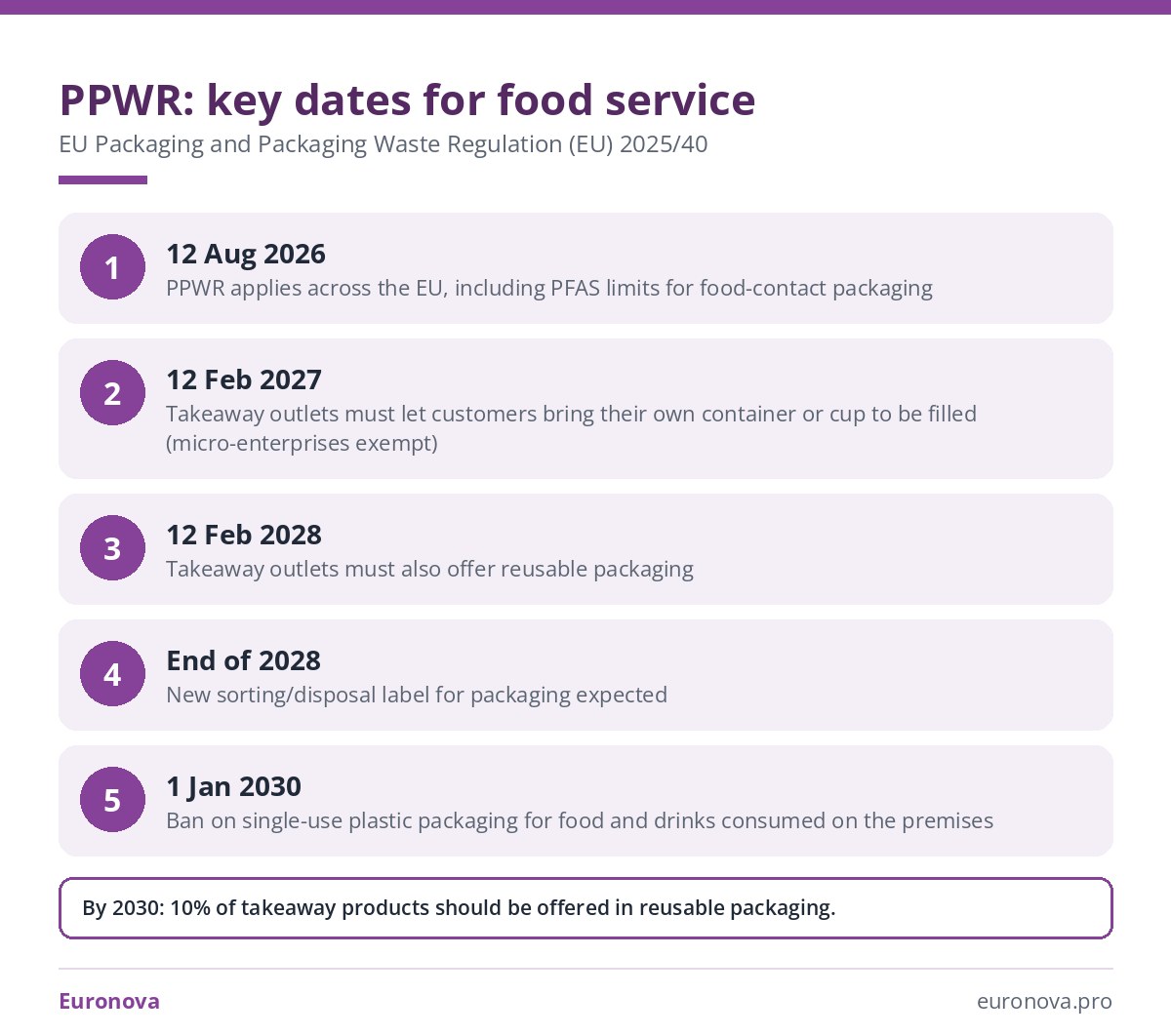
PPWR: the EU packaging regulation applies from 12 August 2026. From 12 February 2027 you must allow customers to bring their own container for takeaway food and drinks, and from 1 January 2030 single-use plastic packaging for food and drinks consumed on the premises is banned.
The cheapest route: reusable tableware in the dining room and paper packaging for takeaway mean less purchasing, less waste and less adapting to every new regulatory change.
Rules on plastic in food service have arrived gradually, so many business owners still have the situation of a few years ago in mind. This is where things stand in November 2026.
Bans under the SUP Directive. SUP (single-use plastics) refers to the EU rules on single-use plastic products. Since 2021, the SUP Directive (EU) 2019/904 has banned placing on the market single-use plastic cutlery (forks, knives, spoons and chopsticks), plates, straws, drink stirrers, expanded polystyrene food and drink containers and cups, and products made of oxo-degradable plastic. If you are still handing out plastic forks from old stock, it is high time to change.
Reduction target for cups and containers. The same directive requires member states to achieve a measurable reduction in the consumption of single-use plastic cups for beverages and food containers by 2026 compared with 2022. To reach it, countries set national targets and measures, which often apply directly to food and drink outlets. Check the current national rules in your country to see which obligations apply to your business.
Extended producer responsibility. Cups and food containers are covered by extended producer responsibility schemes, under which producers also cover part of the cost of cleaning up litter. These costs are ultimately reflected in the price of single-use products.
ban on single-use plastic cutlery, plates, straws, stirrers and EPS containers
reusable cutlery and tableware or plastic-free alternatives
2022–2026
EU target: measurable reduction in single-use plastic cups and food containers, with national targets
measures for food and drink outlets, more reusable tableware
12 Aug 2026
PPWR applies, including PFAS limits for food packaging
more reliable paper packaging from suppliers
12 Feb 2027
customers may bring their own container or cup
a procedure for filling customers' containers
1 Jan 2030
end of single-use plastic packaging for food and drinks consumed on the premises
reusable tableware only in the dining room
What sticking with single-use plastic costs
The cost of a single-use product is not just its purchase price. You pay it again with every sale, you need storage space for it, and after use it becomes waste your business has to dispose of. A reusable glass or plate is bought once and used hundreds of times.
A few points that cause the most trouble in practice:
Recurring cost. Every cup with a lid is a line item with every coffee. With higher footfall, small amounts quickly add up to an annual sum comparable to buying a complete set of cups.
“Reusable” in name only. Packaging counts as reusable only if it actually goes back into reuse. A label or a notice to guests is not enough.
Material composition. Even a paper cup or box may contain plastic, for example as an inner coating or a lid. Check the material description when ordering.
Example. A café sells 120 coffees a day in single-use plastic cups and is open 360 days a year. That is 43,200 cups with lids a year. At a purchase price of, say, €0.10 per cup with lid, that comes to €4,320 a year on packaging alone, before storage and waste disposal. The same café serving coffee in cups on the premises and in paper cups without a plastic lining for takeaway reduces this line item to zero in the dining room, and can cut it further for takeaway with an incentive for customers who bring their own cup. Run the calculation with your own prices and sales.
How to reduce plastic in your business step by step
Take the invoices from the last three months and list every plastic item: cups, lids, tubs, bags, cling film, straws. Next to each, note where it goes: dining room, takeaway, delivery or catering. The list immediately shows what you can drop and what you can replace. The most common mistake is counting only takeaway packaging and overlooking what circulates in the back of house and on the buffet.
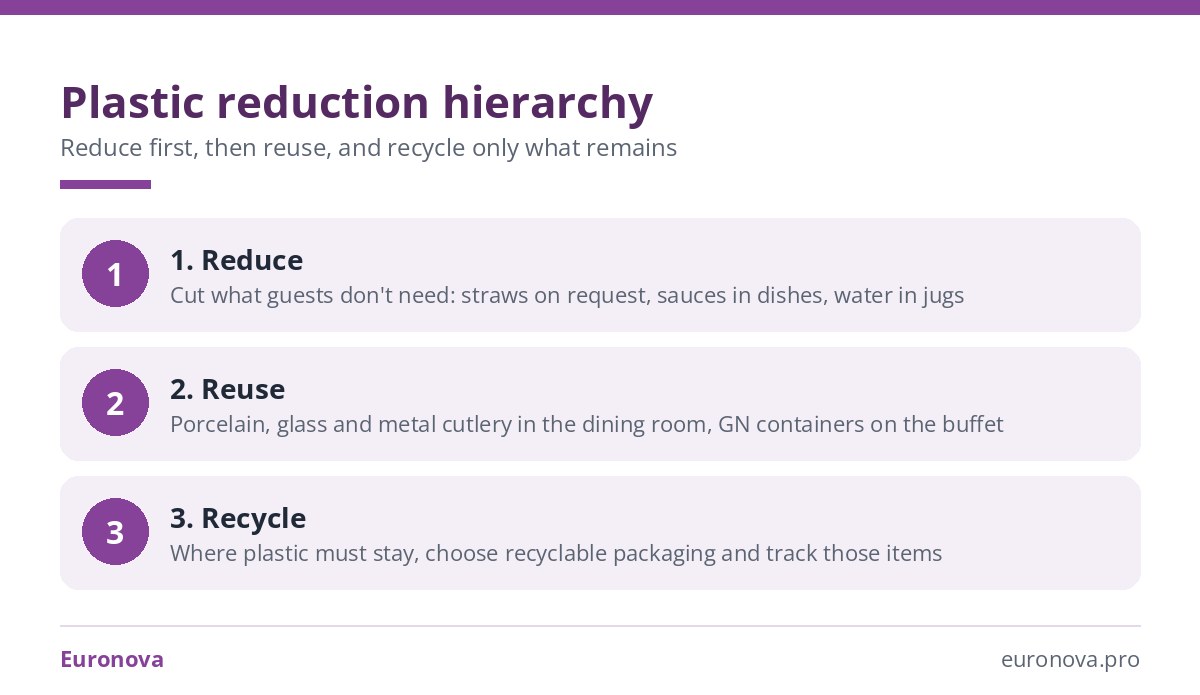
2. Remove what guests do not need
Straws and stirrers only on request, sauces in small dishes instead of sachets, water in a jug instead of single-serve bottles. A jug such as the Pasabahce Bistro 1 l replaces several bottles at every table. At this stage you buy nothing in return, so you save from day one.
3. Reusable tableware only in the dining room
Serve everything guests eat and drink at the table on porcelain, in glass and with metal cutlery. This complies with current rules and with what is coming in 2030. In a café, the sapphire cup 250 ml works well; in a bistro, Notte flat plates 27 × 25 cm; and for starters and desserts, oval platters 29 × 17 cm. Where glass is a risk (gardens, pools, outdoor events), use reusable Tritan or polycarbonate glasses, such as the Tritan glass 25 cl, which you can wash and serve hundreds of times.
When planning tableware, allow for a buffer: you usually need one set on the tables, one in the dishwasher and a reserve for breakages. Buying wholesale in cartons of 6 or 12 pieces makes topping up easy and avoids shortages.
4. Buffet and back of house without cling film and single-use items
Hotel breakfast is one of the places where plastic appears most often: portion butter, jams, yoghurts in pots, cling film on every bowl. Instead, display products in gastronorm (GN) containers that go straight from the cold room to the buffet and into the dishwasher. Small GN 1/9 containers with a capacity of 0.6 l replace portion sachets of condiments, and bread and cutlery are served in bread and cutlery baskets instead of bags. In the back of house, GN containers with lids reduce the use of cling film when storing prepped food.
5. Takeaway: paper, cardboard and customers' own containers
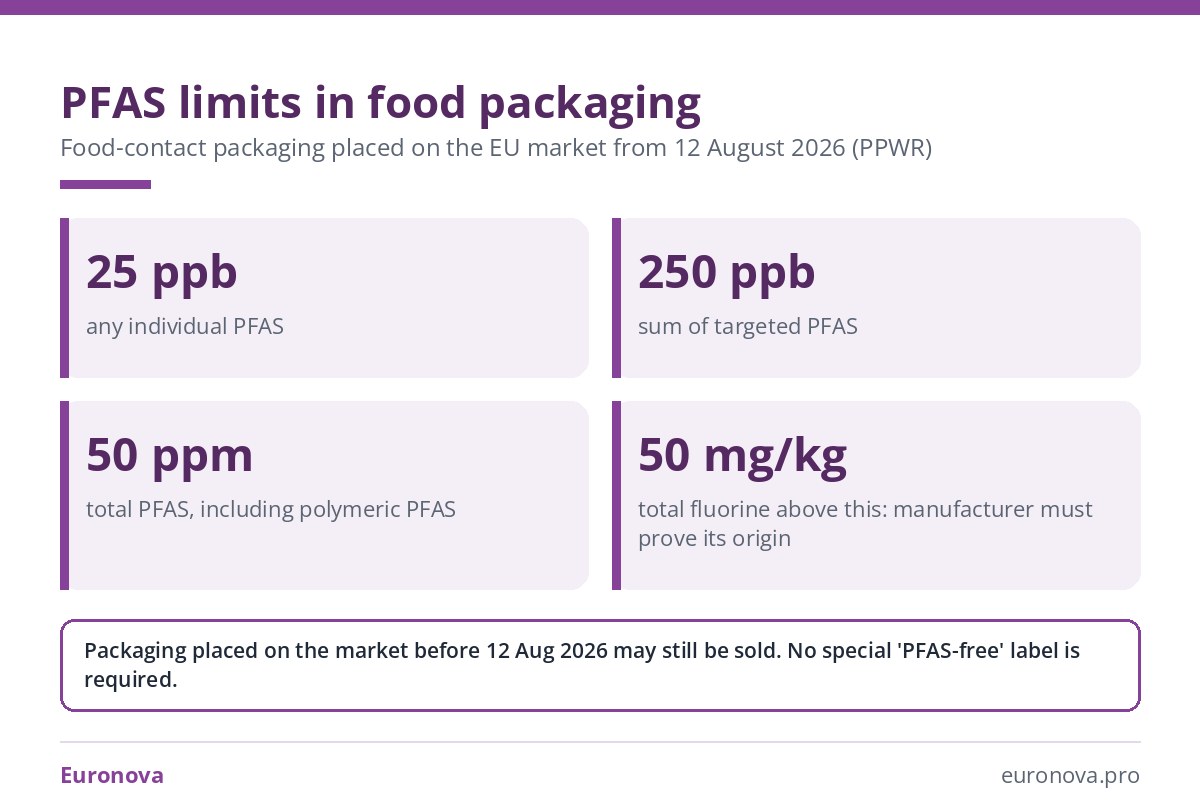
For takeaway food, choose paper and cardboard packaging. From 12 August 2026, food-contact packaging under the PPWR must not contain PFAS above the limit values. PFAS are persistent chemicals that were once used, among other things, to make paper grease-resistant. Before February 2027, set up a procedure for containers brought in by guests: whoever fills them must know how to prevent contamination, for example by serving the portion without the ladle touching the rim of the customer's container.
If part of your range has to stay in plastic (for example soups in tightly sealed delivery containers), choose recyclable packaging and monitor these items regularly. The fewer of them remain, the easier it is to adapt when the next stage of the PPWR arrives.
6. Catering and events
A caterer serving a 150-guest wedding with single-use tableware leaves behind bags of waste. The same event with reusable tableware means the dishes go back for washing and there is no plastic waste. If buying extra sets for seasonal peaks does not pay off, use cutlery hire or hire a full range of catering equipment. For transporting hot food, insulated food carriers and GN containers replace single-use trays with cling film.
7. Train your team and inform guests
A server who automatically puts a straw in every drink undoes half the plan. A short instruction at the bar and till (straws on request, a cup for guests staying in, and asking “eat in or take away?” before pouring the coffee) achieves more than any sign. For guests, clear information on the menu or at the till is enough, for example about an incentive for bringing their own cup.
What to replace with what: quick overview
Single-use item
Alternative
Where it works
Plastic cup on the premises
porcelain cup or mug
cafés, hotels, canteens
Plastic cup at events
Tritan or polycarbonate glass
gardens, pools, festivals
Bottled water on tables
glass jug
restaurants, conference rooms
Sachets of sauces and jams
small GN containers, ramekins
buffets, hotel breakfasts
Cling film on buffet bowls
GN containers with lids
buffets, back of house, catering
Plastic takeaway tub
paper or cardboard packaging
takeaway, delivery
Single-use cutlery at events
metal cutlery, also for hire
catering, weddings, conferences
Schools, nurseries and care homes
In institutional catering, durability and consistency count. A school canteen or care home kitchen serves hundreds of meals a day, so every single-use bowl is multiplied by the number of residents and days in the year. Catering porcelain and tempered glass withstand intensive washing in commercial dishwashers, and GN containers let you prepare, transport and portion a meal in the same container. Purchasing departments buying tableware wholesale also have simpler planning: one list of items, topped up as needed.
Order plastic alternatives in one place
At Euronova you will find everything you need to switch your business to reusable tableware and plastic-free packaging: porcelain plates, cups, glassware, cutlery, GN containers, insulated food carriers, bar accessories and takeaway food packaging. You order at wholesale prices and combine dining room, bar and kitchen equipment in one basket.
Start with the list from your audit and add products from the Euronova range to complete your switch in a single order.
Our view: tableware reduces plastic, not signs
The conversation about reducing plastic in food service often starts with the question of which single-use product to use instead of plastic. In our view, that is the second question. The first is: what could the guest be served on porcelain, in glass or with metal cutlery?
We supply restaurants, hotels, bars, pizzerias, cafés and caterers, and we adapt our range to changes in the food service market. The rules are moving in one direction: from bans, through reduction targets, to accepting customers' containers and the end of single-use packaging in the dining room. A business that switches to reusable tableware today will not have to revisit the topic with every new change.
Keep paper and cardboard packaging for takeaway, choose porcelain and glass for the dining room, and GN containers for the buffet. You can buy this set from us in a single order and top it up when you run short of plates after the season.
Rok
Frequently asked questions
Can I still use single-use plastic cups in the dining room?
Single-use plastic cups and food containers, except those made of expanded polystyrene, are not banned yet, but EU rules require member states to reduce their consumption. Under the PPWR, single-use plastic packaging for food and drinks consumed on the premises will be banned from 1 January 2030. If you already serve in cups and on porcelain in the dining room, you are ready.
Is paper packaging the answer for everything?
It is a good takeaway alternative as long as it contains no plastic. Packaging that is only partly plastic, for example with an inner coating or a plastic lid, still counts as a plastic product. When ordering, check the material description and compliance with the PPWR PFAS limits.
What applies to products banned under the SUP rules?
Single-use plastic cutlery, plates, straws and stirrers, as well as expanded polystyrene food containers and cups, may not be placed on the market. Replace remaining stock with reusable cutlery or plastic-free alternatives. For details on enforcement, contact your local enforcement authority.
Do I have to fill a cup brought in by a customer?
Under the PPWR, takeaway food and drink businesses must allow customers to bring their own container or cup from 12 February 2027. Set up a simple hygiene procedure and train your team before the obligation applies.
Euronova
Let's talk about equipping your business
Write to us if you are looking for HoReCa equipment or supplies to help you cut plastic in your business.