Hotel buffet organisation: layout, equipment and replenishment
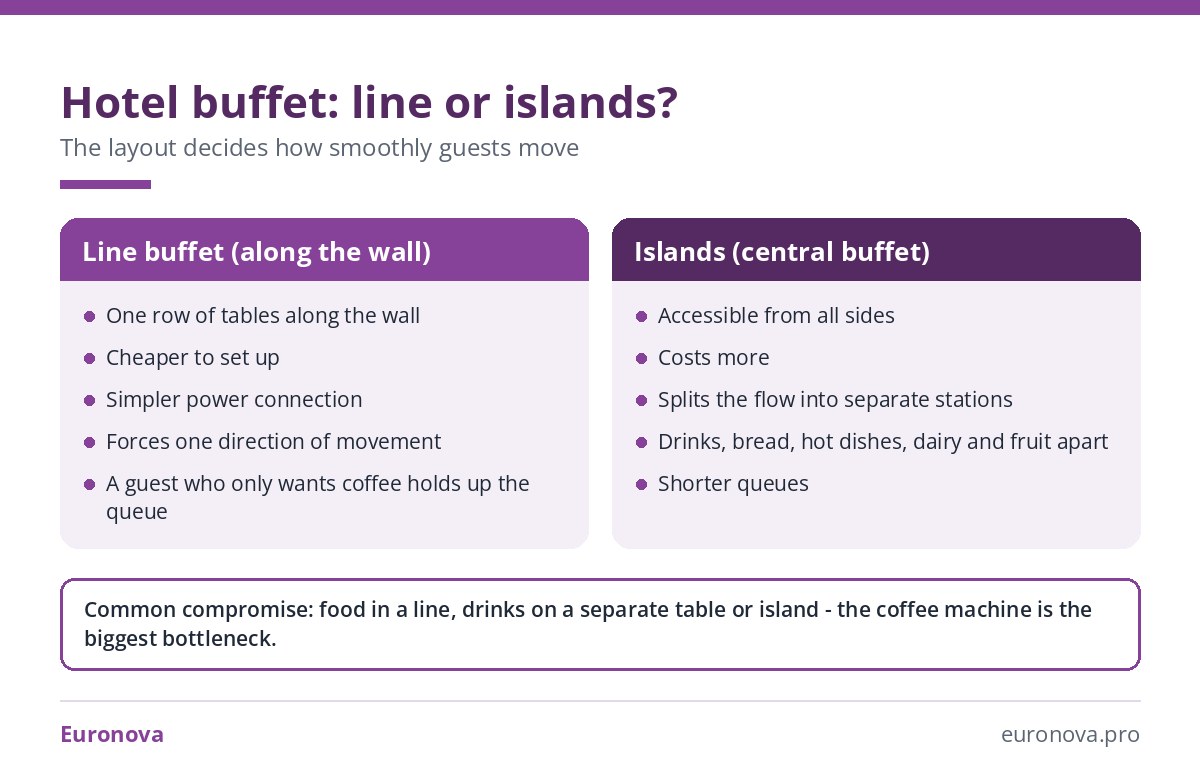
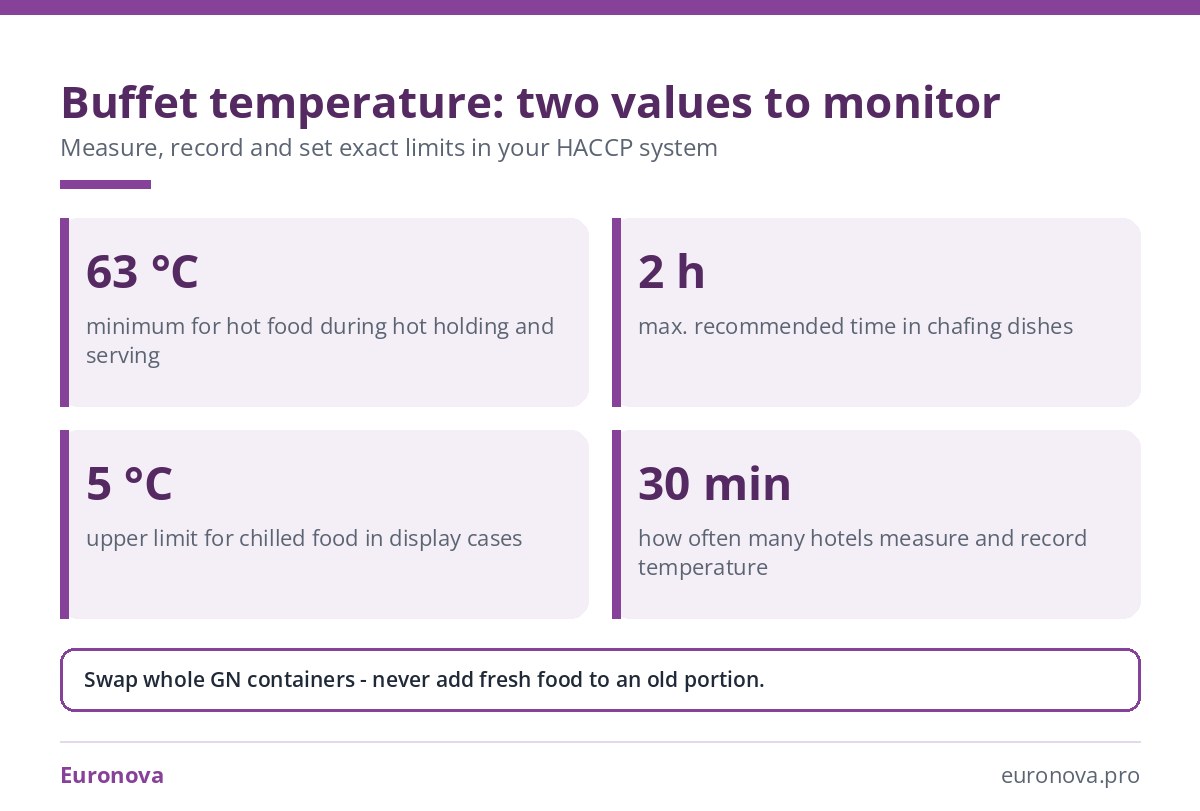
A well-organised hotel buffet works as one system. The layout guides guests without bottlenecks, the serveware matches portions and temperatures, and replenishment means swapping a full container for an empty one, not topping up food with a ladle. A queue at the coffee machine, lukewarm scrambled eggs and full waste bins after service usually happen because the equipment was bought piece by piece, without an overall plan. That is why at Euronova we recommend equipping the buffet as a whole: GN containers, platters, porcelain, glassware, cutlery and appliances from one place, at wholesale prices. Below you will find the whole process, from choosing the layout to the post-service report. The first decision is the shape. A wall (line) buffet is one row of tables along the wall, while a central buffet is accessible from all sides. A line is cheaper to set up and simpler to connect to power, but it forces one direction of movement: a guest who only wants coffee walks past the food containers and holds up the queue. Islands cost more, but they split the flow into separate stations for drinks, bread, hot dishes, dairy and fruit. In practice, many hotels combine the two. The food stays in a line, while drinks go on a separate table or island, because the biggest bottleneck forms at the coffee machine. If the dining room is small, it is enough to move the coffee and juice station to the other end so that guests with a cup do not walk against the flow. The second condition is the routes. A principle of good hygiene practice is that "dirty routes", used by used tableware and waste bins, do not cross "clean routes", along which prepared dishes come from the kitchen. So plan where the trolley for dirty plates will stand before you set up the first chafing dish. Check the sockets too: chafing dishes, the coffee machine, toaster and refrigerated display cases need power at specific points in the room. Guests fill their plates in a predictable order. If the layout follows it, nobody has to go back and nobody gets in anyone's way. The rule for placing tableware is simple: plates and small bowls stand on the side table with the cutlery beside them, coffee cups at the coffee machine, tea cups at the hot water urn and glasses by the juices. The tableware is waiting where the guest needs it, so nobody has to look for it. To run a buffet you need a chafing dish for hot dishes, a soup kettle, an automatic coffee machine, a toaster, a hot water urn with a tap, a cereal dispenser, a bread basket, a fruit stand, a juice dispenser and buffet stands, for example for rolls. For urns and hot drink dispensers, see the hot drink urns category. On top of that, you need everything guests pick up with their hands. When buying, it is not only the list that matters but also the quantities. You need enough plates, bowls and cups for the busiest hour, with a reserve for the time when some tableware is in the dishwashing area. You need at least two sets of GN containers: one on the buffet, the other being filled in the kitchen. Work this out with your own figures. Example: if 60 guests are seated at the same time at peak and each takes a plate for cold food, a plate for hot food and a bowl for yoghurt, there are 180 pieces of tableware in circulation before the dishwasher returns the first batch. Add a reserve for breakages. If you top up with tableware from the same range, the buffet keeps a uniform look for years, so choose lines that are permanently available from wholesale stock. Each type of serveware has a different job on the buffet. These make up most hotel buffets: By the pool, on the terrace or at a children's buffet, many establishments use plastic glasses such as the Tritan glass 25 cl. For takeaway food, breakfasts for guests leaving at dawn and finger food portions, disposable products are useful. A good display sells food through the eyes, but it also has to protect it from guests. A few rules that work in any hotel: On a hot buffet, two values count. Food hygiene guidance commonly requires hot food to be at least 63 °C during hot holding and serving. The second value is time: many food service guidelines recommend that dishes stay in chafing dishes for no longer than about two hours. After that, food loses quality and is often dried out. Record the exact limit in your HACCP system, in line with the rules of your local food safety authority. Cold dishes and highly perishable products, such as dairy, cold cuts and fish, are kept in refrigerated display cases. Hygiene guidance typically gives up to 5 °C for chilled food. Many hotels measure the temperature every 30 minutes and record it on a form. It makes sense to combine sensors with a central display with a paper log as a backup, and to mark the permitted limits directly on the equipment. Include these checks in your HACCP system (the plan in which an establishment describes hazards and how they are controlled), so that every check is documented. HACCP-based procedures are required of all food businesses under Regulation (EC) No 852/2004. A buffet most often fails during service, not before it. This routine works in most establishments: A buffet will always generate some leftovers, but how many depends on a few decisions you make once: At Euronova you will find everything this guide covers: GN containers, platters, serving utensils and thermo boxes, porcelain, glassware and cutlery, disposable products, and equipment for heating, chilling and displaying food. You buy at wholesale prices and from one place, whether you are opening a hotel or topping up tableware after the season. Start with the catering equipment in the Euronova online shop and put together your buffet stations following the table above. For one-off events with more guests, catering equipment hire is also an option. When a hotel plans a buffet, it usually starts with the menu and chooses the equipment last. On one point we recommend the reverse order: before you decide what to serve, decide what you will serve it in. GN containers to one standard, which fit the chafing dish, the display case and the thermo box, are the basis for smooth portion swaps. Porcelain from one range that is available wholesale lets you buy missing pieces without changing the look of the table. Utensils and baskets chosen for each station mean staff never have to look for anything during service. That is why our range covers the whole buffet, from porcelain and glassware to containers, platters and appliances. We supply both establishments that are just starting out and businesses with many years of experience, and we keep adapting our range to the needs of the food service sector. Rok By layout, a buffet is either a wall (line) buffet or a central buffet accessible from all sides, sometimes split into several islands. By time and occasion, hotels set up breakfast, lunch, dinner and conference buffets. Each can have a cold, hot and sweet section. Count the hot and cold dishes you serve in GN containers and multiply by two: one set stands on the buffet, the other waits filled in the kitchen. Add a few smaller 1/2 or 1/3 containers for the end of service, when you put out smaller quantities. Food hygiene guidance commonly requires hot food to be held at a minimum of 63 °C at all times. Many guidelines recommend that it stays in chafing dishes for no longer than about two hours. Measure and record the temperature regularly, and set the exact limits in your establishment's HACCP system in line with your local food safety authority. Yes, the hotel is responsible for allergen information on the food it serves. The best place for it is the label with the dish name, in the local language and in English. In the breakfast room, hotels usually choose porcelain and glass, which create an impression of quality. Disposable serveware suits takeaway breakfast packs, outdoor buffets and finger food portions.Hotel buffet organisation: layout, equipment and replenishment

In short
Contents
Line buffet or islands: it decides guest flow
Breakfast buffet station order
Station
What goes on it
Equipment
Tableware at the start
flat plates, side plates, small bowls, cutlery
side table, cutlery baskets
Bread
rolls, bread, croissants, butter, jams
bread baskets, stands, board and knife
Cold dishes
cold cuts, cheeses, fish, vegetables, salads
refrigerated display case, tiered stands, oval platters
Hot dishes
scrambled eggs, sausages, roasted vegetables, milk soup
chafing dishes with GN containers, soup kettle
Dairy and cereals
yoghurts, cereals, muesli, fruit
cereal dispenser, bowls, coupes, fruit stand
Drinks
coffee, tea, juices, water
coffee machine, hot water urn, juice dispenser, cups and glasses
Breakfast buffet equipment: shopping list
Serveware: types and uses
Food display: attractive and safe
Temperature: two values to monitor
Fast buffet replenishment, step by step
Less food waste on the buffet
The whole buffet from one wholesale supplier

Our view: a buffet is built from the equipment up
FAQ
What types of hotel buffet are there?
How many GN containers do I need for a breakfast buffet?
How long can hot food stay on a buffet?
Do allergens have to be labelled on a buffet?
Porcelain or disposable serveware?
Sources
Recommended