Food wrap film in catering: uses and good practice
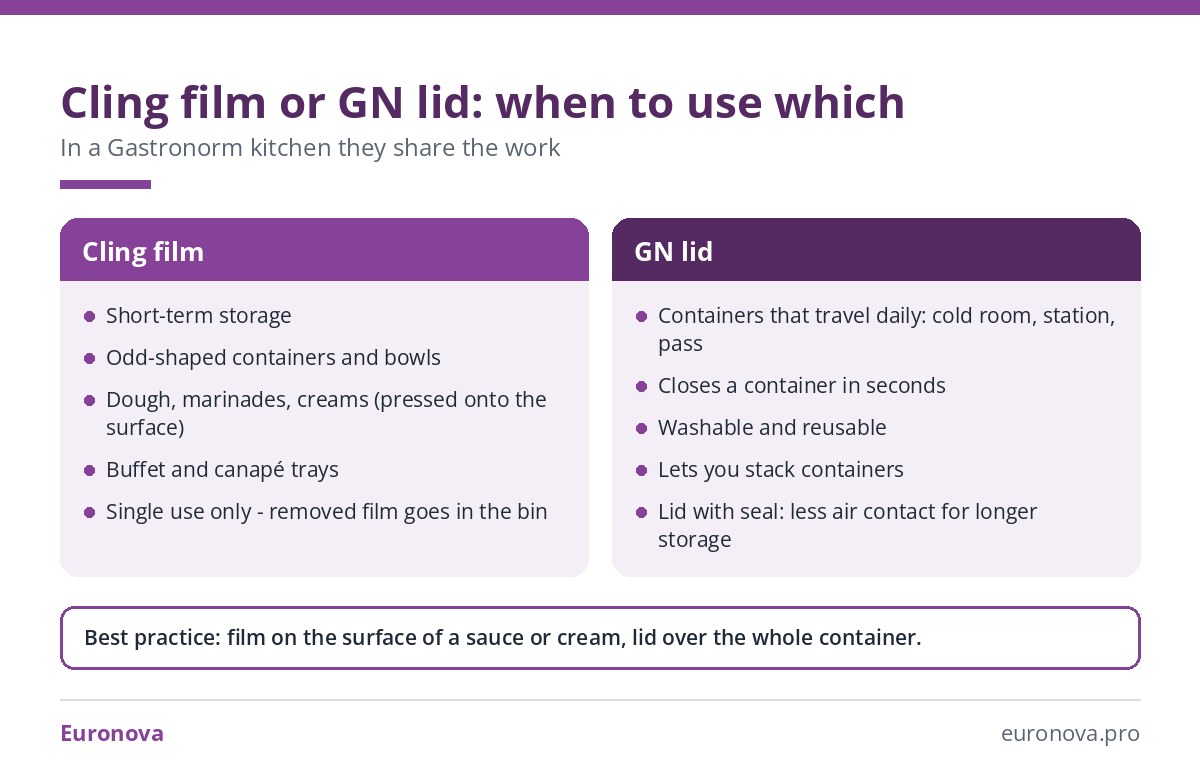
In a food service business, food wrap film has one main job: protecting food from drying out, picking up odours and contamination during preparation and service. You use it to cover prepped items in GN containers, protect dough and marinades, cover canapés before the buffet and wrap portions for transport. In a kitchen serving several hundred plates a day this is no small matter, but a consumable used every day, just like food wrapping paper or takeaway packaging. So it pays to choose the right type of film for each task, buy it together with your other supplies and use one standard across the whole kitchen. Below you will find practical uses, the differences between types of film, rules for safe, compliant use and advice on planning your purchases. Food wrap film is a thin plastic or aluminium material approved for direct contact with food. In kitchen language the term usually covers two things: clear, stretchy cling film (also called stretch film or plastic wrap) and aluminium foil. Whether a film is suitable for food depends on its labelling. Regulation (EC) No 1935/2004 requires material intended for food contact that is not yet in contact with food to be labelled with the words "for food contact", an indication of its specific use, or the glass and fork symbol. The same regulation requires manufacturers to provide special instructions for safe use where necessary. So look for information on permitted temperatures or food types on the roll's packaging, not in online tips. Plastic films are also subject to the detailed rules of Commission Regulation (EU) No 10/2011. It specifies which substances may be used to make such products, sets limits on the migration of their components into food and requires a written declaration of compliance throughout the supply chain. For you as a food business, this means one simple rule: buy film clearly labelled for food from a supplier that sells products for food service. Each type of film has its strengths. It makes sense to keep at least two in the kitchen and agree clearly with the team which one is used for what. This is the most widely used film in a commercial kitchen. It clings to the rim of a bowl or container and to the surface of the food itself, limiting air contact. Typical uses in food service: Aluminium foil reflects heat and is easy to shape, so it works where cling film cannot. In the oven it protects the top of a roast from burning, in gratins it lets the vegetables inside cook through, and on the grill you can make tightly sealed parcels of fish or vegetables. After roasting, meat covered with foil can rest without losing heat quickly. In catering, aluminium foil seals trays of hot food on the way to the customer, ideally combined with a thermo box. Where a product needs to breathe or goes straight into the guest's hand, food wrapping paper is the right choice. Burgers, sandwiches, wraps and pastries wrapped in paper stay crisper, and fast food trays lined with paper are quicker to clear. In many businesses, paper and film sit side by side at the packing station. You will find both in the film, food wrapping paper and rolls category. Regulation (EC) No 852/2004 on the hygiene of foodstuffs requires every food business to protect food against contamination at all stages of production, processing and distribution. Film is one of the simplest tools for meeting this obligation in practice. Here is a procedure you can easily add to your workstation instructions. This is one of the most common questions from guests and staff. Aluminium is part of the diet, and the European Food Safety Authority (EFSA) has set a tolerable weekly intake of 1 mg per kilogram of body weight. It also states that food contact materials can increase the amount in food, especially acidic or salty food. In practice, this means safe use according to the manufacturer's instructions: for longer storage of vinegar marinades, citrus fruit, pickled vegetables or salted fish, choose a GN container with a lid or cling film intended for such products. Use aluminium foil where it adds the most value: roasting, grilling and keeping food hot. Aluminium foil usually has a shiny side and a matt side; the difference comes from the rolling process. As a rule, both sides can be in contact with food. If the manufacturer recommends otherwise, it says so on the packaging. More important than the side are a tightly sealed parcel and a thickness chosen for the task. In a kitchen working with the Gastronorm system, film and lids do not compete but share the work. Cling film is best where speed and close contact with the product count: short-term storage, odd-shaped containers, dough, buffet trays. A GN lid wins for containers that travel every day between the cold room, the workstation and the pass, because it closes them in seconds, can be washed and lets you stack containers. A lid with a seal, such as the GN 2/3 lid with seal, further limits air contact during longer storage. A well-organised kitchen therefore has both. Press film onto the surface of a sauce or cream in a container, and use a lid to close the whole container. For portions that go out, in catering, schools or care homes, they are joined by takeaway food packaging and thermo boxes. Film disappears from the storeroom faster than you think, and running out mid-service means improvising. A few rules that make supply easier: In food service, food wrap film is one of those products you only think about when it runs out. And yet it passes through a chef's hands ten times a day: for mise en place, for dough, for the buffet, for every portion that goes out. That is why we see it as part of a system, not a one-off purchase. Film works together with GN containers and lids, food wrapping paper, takeaway packaging and thermo boxes. When these elements come from one source, it is easier to keep one standard across the whole kitchen and easier to plan orders. That is exactly why at Euronova we have brought disposables, including food wrap film and paper, together in one place alongside buffet equipment, kitchen containers and HoReCa appliances. We supply restaurants, hotels, bars, pizzerias, cafés and catering companies, and our wholesale prices are designed to make everyday restocking simple. Rok At Euronova you will find disposable products for food service: food wrap film, food wrapping paper, till rolls, takeaway packaging, cups, plates, cutlery and finger food products. All at wholesale prices, in one shop that supplies both newly opened businesses and companies with many years of experience. Add GN containers with lids, paper and cardboard packaging and kitchen utensils to the same basket, so the whole kitchen is supplied from one place. It is film intended for direct contact with food that meets the requirements of Regulation (EC) No 1935/2004 and, for plastics, also Regulation (EU) No 10/2011. You can recognise it by the glass and fork symbol or the words "for food contact" on the packaging. In food service the term usually means clear cling film, although aluminium foil is also approved for food contact. Polyethylene (PE) film is one of the most widely used types of cling film. In a commercial kitchen it is used to cover containers and bowls, wrap dough, meat, cheese and sandwiches, shape roulades and protect canapés before the buffet. Check the temperature range and microwave suitability on the product packaging. Aluminium foil labelled for food contact is approved for kitchen use. EFSA states that more aluminium can migrate into acidic and salty foods, so such products are better stored in GN containers or under cling film, with aluminium used mainly for roasting, grilling and keeping food hot. Always follow the manufacturer's instructions on the packaging. Cling film does not go in the oven; aluminium foil or baking paper is meant for that. In a microwave you can only use film that the manufacturer explicitly approves for it, and in the way described, usually without direct contact with fatty food. If the packaging does not say so, cover the dish with a microwave-safe lid. Start by counting how many rolls you use in a normal week and at peak season, then set a minimum stock that covers at least one delivery cycle. It is most convenient to order film together with other disposables, which reduces the number of deliveries and gives you wholesale prices.Food wrap film in catering: uses and good practice

In short
Contents
What is food wrap film
Types of film and their uses in food service
Type
Best use
What to watch out for
Cling film (stretch film)
covering containers and bowls, wrapping dough, meat, cheese, sandwiches and cold portions, protecting canapés before the buffet
temperature range and microwave suitability as stated on the packaging; not in the oven
Aluminium foil
roasting and baking, grilling, covering meat while it rests, keeping food hot during transport
contact with acidic and salty foods according to the manufacturer's instructions; not in the microwave
Food wrapping paper
wrapping sandwiches, pastries and takeaway food, lining trays and baskets
paper weight and grease resistance to suit the product
GN lids and containers with lids
longer storage in the cold room, reusable, transport on GN trays
size that fits the container, washing after every use
Cling film: storage and cold preparation
Aluminium foil: heat, roasting and transport

Food wrapping paper as a complement
How to use food wrap film safely and in line with HACCP
Aluminium foil and acidic or salty foods
Which side of aluminium foil to use
When to use film and when a GN lid
How to plan cling film purchases for your business
Our view
Film and packaging in one order

FAQ
What does "food wrap film" mean?
What is polyethylene film used for in the kitchen?
Is food cooked in aluminium foil safe?
Can cling film go in the oven or microwave?
How much cling film should a restaurant order?
Sources
Recommended