Cake Display in a Pastry Shop: Display Case, Layout and Hygiene
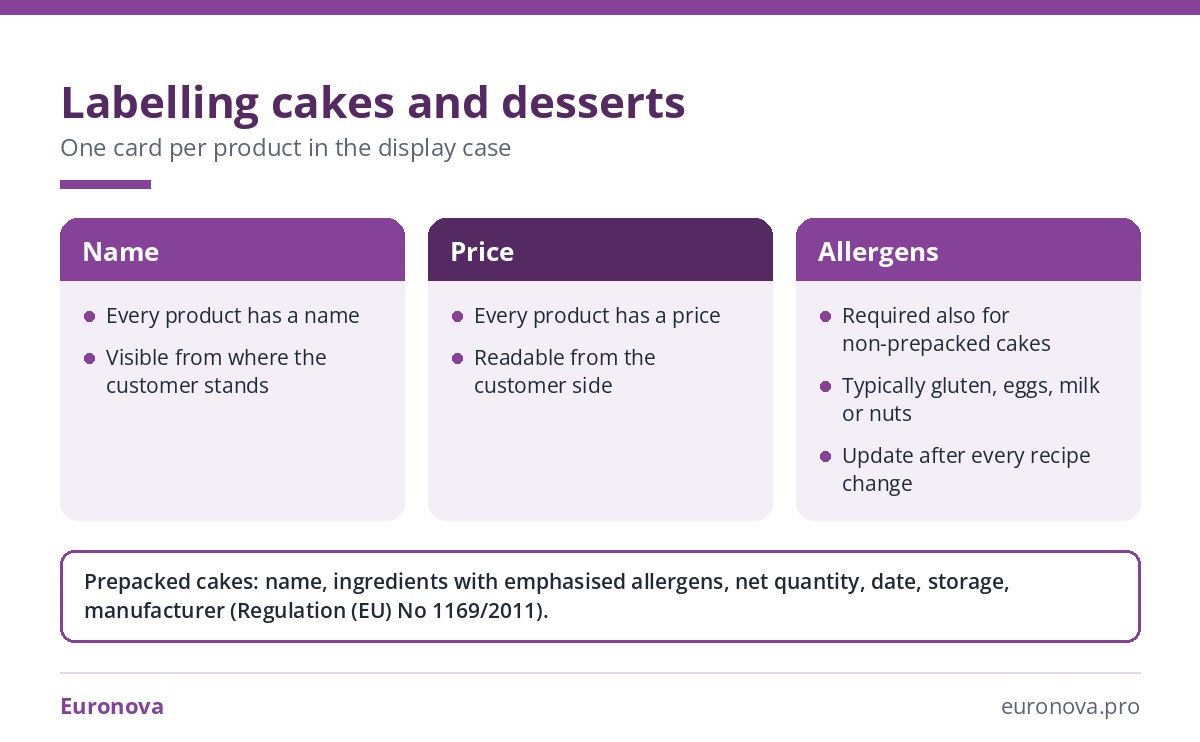
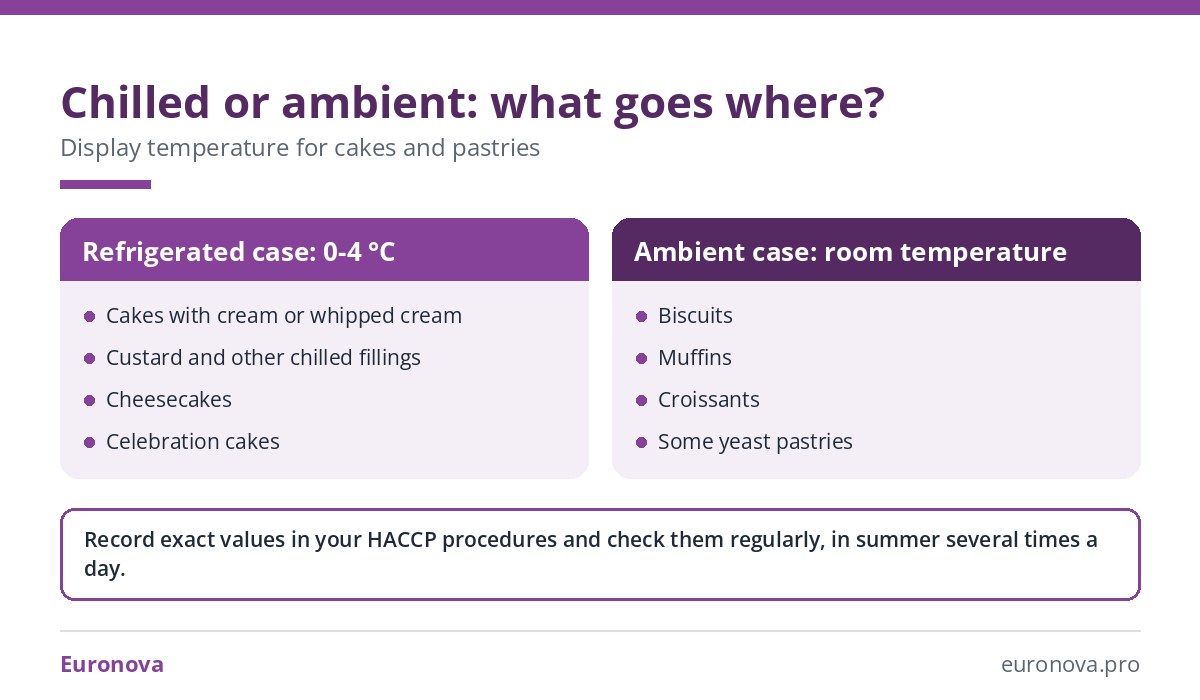
Successful cake display in a pastry shop rests on three pillars: a display case chosen for the type of product (refrigerated for anything with cream, ambient for dry baked goods), a layout that guides the customer's eye from the door to the counter, and serveware and tools that keep order, hygiene and the pace of service. Each of these affects sales and the outcome of a hygiene inspection, so they are best planned together rather than bought piece by piece. At Euronova we put exactly this kind of set together in one place: from cake stands, cake covers and cake servers to takeaway packaging. A pastry shop customer rarely comes in with a shopping list. They decide in front of the display case, within seconds, based on what they see. The trade portal GastroWiedza puts it briefly: customers "buy with their eyes". For the owner, this means the display case works as the best salesperson: it shows the range, suggests a choice and justifies the price. Good display does three things at once. First, it makes sure the cake looks fresh all day, not just in the morning. Second, it lets staff serve a portion quickly without rearranging half a shelf. Third, it keeps products in the conditions required by food law. If one of these fails, the others suffer: fogged glass hides the most beautiful cake, an overfilled shelf slows down the queue, and a display case that is too warm means collapsed cream and a risk at inspection. The first decision concerns the unit itself. A trade overview of pastry display case types distinguishes four basic types, and the choice depends on what you sell and how much space you have. In practice most pastry shops combine two types: a large refrigerated display case for cream cakes and celebration cakes, and a smaller ambient or countertop one for dry baked goods by the till. This split does not only make sense for hygiene. Yeast pastries and crisp biscuits gain nothing from refrigeration, but they take up space that is lacking for cheesecakes and celebration cakes at the height of the season. If you run a hotel, catering business or canteen, the question is similar, only the scale differs. A breakfast buffet with yeast pastries and croissants manages without refrigeration, but a dessert with whipped cream at a wedding banquet needs chilled display for the whole service. Once you know what kind of unit you need, you compare specific models. It pays to have a short list of criteria to hand, because in photos all display cases look similar. These criteria match the recommendations in a guide to displaying cakes and desserts, which considers stable temperature, even warm light, clean glass, ergonomic shelves and easy cleaning to be the basics. Choose the capacity according to daily sales: at opening, the display case should hold the full range, with room for seasonal products, but without filling every centimetre. Aesthetics never beat safety. Regulation (EC) No 852/2004 on the hygiene of foodstuffs is clear: premises must be clean and in good repair, and equipment must ensure appropriate food temperatures that can be monitored and, where necessary, recorded. For a pastry shop, this means a display case with a readable temperature display and the habit of reading it regularly. Every business that prepares food for sale uses procedures based on HACCP principles, the Hazard Analysis and Critical Control Points system. Set the storage conditions for pastry products according to the type of product, recipe and ingredients; unstable products, especially those with creams, require time and temperature control. In practice, cakes with cream, whipped cream, custard and other fillings that need refrigeration are displayed at 0–4 °C, while dry baked goods and some yeast pastries can be kept at room temperature. General hygiene guidance for chilled foods specifies storage at 5 °C or below. Write the final list of products that need refrigeration, and their temperatures, into your HACCP procedures. If you have doubts about a particular recipe, resolve them with the person who prepares or audits your HACCP system, or with your local food safety authority. Two situations need special attention: The display case itself is half the success. The other half is the way you fill it every morning. These rules were compiled in GastroWiedza's guide to dessert display and work in a small café as well as in a pastry shop with several metres of display cases. The most common mistake when equipping a pastry shop is treating the display case as an empty box into which trays go straight from the oven. In fact, bases, stands and covers decide whether the display looks professional. A matching range of serveware across the whole display case looks better than a random mix of plates. It is also easier to replace a broken piece when the whole series comes from one source. At Euronova we have a dedicated pastry equipment section, alongside porcelain tableware, glassware, serving utensils, GN containers and takeaway food packaging. This way you can order cake stands, covers and cake boxes together. We serve venues that are just opening as well as pastry shops, cafés and hotels with many years of experience that are restocking. You will find the full range in our HoReCa equipment catalogue. The label next to a cake is not just a piece of equipment. The rules for food labelling in the European Union derive from Regulation (EU) No 1169/2011. For cakes sold prepacked, the mandatory particulars include the name, a list of ingredients with emphasised allergens, net quantity, the best-before or use-by date, storage conditions and details of the manufacturer. Two details matter for a pastry shop. Bakery and pastry products that are normally consumed within 24 hours of production are exempt from the obligation to state a date of minimum durability. And in the list of ingredients, emphasise only the allergens, as an inspector may object to emphasising other ingredients. For non-prepacked cakes sold by the slice from the display case, you must still inform customers about allergens. The European Commission has published guidelines on allergen labelling to help with this. The simplest approach is to prepare one card per product: name, price and list of allergens, in a pastry shop typically gluten, eggs, milk or nuts, for example. Staff can then answer customers' questions without leafing through a recipe book, and you can be sure the information is up to date after every recipe change. A clean display case is both a legal requirement and a sales argument. A good routine looks like this: This is where the choice of unit and tools proves its worth. Smooth, removable shelves, porcelain and glassware designed for intensive food service use, and GN containers in one standard noticeably shorten clean-up after closing. It pays to keep the temperature and cleaning log on one sheet next to the display case, so every member of staff on shift knows where to fill it in. When equipping a pastry shop, many owners start with the display case and stop there. In our view, display is a system: a unit that holds the temperature, serveware that raises the product to eye level, serving utensils that speed up the queue, and packaging that lets the customer take the cake home undamaged. That is why we build our range so that all these elements can be put together in one place. We adapt it to the needs of food service and update it continually, so you can equip your venue in one go instead of buying missing items from several places. Our range is used by venues opening from scratch and by businesses with many years of experience. Both are looking for the same thing: a display case that sells and a back of house that does not slow work down. Rok Cakes with cream, whipped cream or custard and cheesecakes are displayed in a refrigerated display case, in practice at 0–4 °C. Dry baked goods can be kept at room temperature. Record the exact values for your products in your HACCP procedures and check them regularly. No. Cheesecake is one of the cakes that need a low temperature, so it belongs in a refrigerated display case. An ambient display case is meant for dry baked goods such as biscuits, muffins and croissants. Product rotation is a daily task: older portions to the front, fresh ones at the back. It pays to refresh the seasonal layout every few weeks so that regular customers see something new and the display does not become stale. Pastry products that are normally consumed within 24 hours of production are exempt from the obligation to state a date of minimum durability. Other information, including emphasised allergens, still applies to prepacked products.Cake Display in a Pastry Shop: Display Case, Layout and Hygiene

In brief
Contents
Why display drives sales
Refrigerated or ambient display case
Display case type
What to display in it
For which type of venue
Refrigerated
cream cakes, cheesecakes, celebration cakes, desserts that need a low temperature
pastry shops, cafés with a full cake range
Ambient (non-refrigerated)
dry baked goods: biscuits, muffins, croissants, some yeast pastries
bakeries, cafés, hotel breakfast rooms
Built-in
range depending on the version, built into the counter
venues fitted out from scratch with pastry shop furniture
Countertop
smaller portions, individual desserts, biscuits by the till
small cafés, bars, till areas
What to look for when choosing a display case
Temperature and food safety
How to arrange cakes in a display case step by step
Serveware and tools that organise the display
All equipment in one order

Labelling: name, price and allergens
Cleaning and daily care of the display case
Our view
Frequently asked questions
What temperature should a cake display case be?
Can cheesecake be kept in an ambient display case?
How often should the display case layout be changed?
Do cakes need a best-before date?
Sources
Recommended