Stackable Glasses for Hospitality: Sizes, Selection and Care
Stackable glasses solve two problems at once in hospitality: they take up only a fraction of the shelf space, and they are built for the tough daily routine of dishwasher, bar counter and tray. You serve water, soft drinks, juices and long drinks in them, in restaurants, cafés, bars, at hotel breakfasts or in canteens. What matters is that size, shape and quantity suit your business, and that you wash and store the glasses so they stay clear for a long time. At Euronova you can get stackable tumblers and long drink glasses in boxes of 6. This guide shows which size you need for what, what to look for in material and shape, how to calculate your stock and how to handle the glasses day to day. Space is tight in almost every commercial kitchen. Shelves under the counter, cupboards behind the bar, the store room next to the cold room: every centimetre is in use. An ordinary tumbler stands on its own and occupies its whole footprint. Stackable glasses nest inside each other, so a tower of several glasses needs the footprint of just one. In a bar with 150 glasses in circulation, that is the difference between a full shelf and a single compartment. On top of that there are benefits you only notice in daily work: For cafés, pizzerias and bistros, the stackable glass is often the workhorse of the house. In care homes, nurseries and schools, there is the added benefit that compact tumblers sit well in the hand and stand steadily on the table. Capacity decides whether a glass suits your drinks menu. Glasses that are too small look stingy; glasses that are too large make a 0.2 l drink look lost and use unnecessary amounts of ice for a long drink. This overview helps you choose: In practice, most businesses manage with two sizes. A lowball of around 31 to 32 cl covers water, soft drinks, juice and drinks on ice. A hiball of around 39 cl takes care of long drinks and anything served with plenty of ice. Our Stack Up lowball 32 cl and Stack lowball 310 ml are typical of the first group, while the Stack hiball 390 ml belongs to the second. For beer, sparkling wine, wine or ice cream sundaes, stick to the right specialist glasses. You will find them in our glasses and glassware category, for example the Bistro beer glass 38 cl or the Estrella water glass 36 cl for a laid table. A hospitality glass is washed several times a day, picked up with wet hands, pushed across trays and stacked. Whether it survives that for years and stays clear depends largely on its shape. In its operating instructions for glasswashers, the warewashing manufacturer Winterhalter names three features that make glasses dishwasher-friendly: For stackable glasses this means: choose models with a clear, compact basic shape and a straight or slightly tapered wall. That is exactly the design that makes stacking possible, and it also suits machine washing. As for material, tempered glass is the usual standard for heavily used tumblers in everyday hospitality. It is made for frequent washing and for work at the bar and buffet. Before buying, check two practical measurements as well: If you sell drinks by volume, for example with "Cola 0.2 l" or "Apple spritzer 0.3 l" on the menu, legal metrology rules apply to the glasses. In the European Union, capacity serving measures are covered by the Measuring Instruments Directive 2014/32/EU (Annex MI-008) and by national metrology rules. Such glasses carry a fill line with a volume marking, which is why many stackable hospitality tumblers are available with a fill line at 0.2 l or 0.25 l. For your purchase this means: decide which drinks you will serve in which glass before you order. A water glass that only comes to the table with a carafe does not need a line. A glass for soft drinks sold by measure does. If you are unsure what marking your offer requires, your national metrology authority can give you a binding answer. The most common mistake when buying glasses is to calculate by seats alone. Glasses are in three places at once: on the table, in the dishwasher or drying area, and on the shelf as back-up. On top of that you need a reserve for breakage. An example for a café with 40 seats that uses one glass for water, juice and soft drinks: With glasses in boxes of 6, that is around 21 boxes. Plug in your own assumptions: high-volume bars with short wash times plan more glasses in circulation, canteens with fixed meal times more reserve on the shelf. This is exactly where stackable glasses show their advantage: 128 stacked glasses need far less shelf space than 128 tumblers standing individually. For hotels and larger businesses it pays to standardise the water and soft drink glass across the restaurant, breakfast and conference areas. Purchasing can then order one model in large quantities, and glasses can be swapped between areas when things get tight. The best glass shape is of little use if the glasses suffer in the dishwashing area. With a few fixed routines, stackable glasses stay clear and smooth for a long time. In its dishwashing guide for hospitality, Miele Professional explains that washing in a professional glasswasher meets the hygiene requirements of DIN 10512 and DIN EN 17735, the standards that apply to commercial washing of glasses and tableware. The standardised process is also faster and more economical than washing by hand, and with fewer handling steps it reduces breakage and the risk of injury. In the instructions linked above, Winterhalter gives guide values of about 60 °C for washing and 65 °C for the final rinse. The instructions of your own machine's manufacturer take precedence. Place the glasses in the rack with space between them so they do not touch during washing and get scratched. For tall glasses such as the hiball, use a rack with enough height. Glasses are stacked only after washing, never in the machine. Let the glasses air-dry after washing. According to Winterhalter, glasses should not be polished afterwards or cooled down quickly, as both put stress on the glass. Anyone who holds freshly washed, hot glasses under cold water or fills them with ice on a busy evening shortens their life. An adequately sized stock is therefore also a care measure: each wash load gets time to cool down. Only stack glasses that are completely dry and cooled. Wet glasses can stick inside each other, and hot glasses contract as they cool. Keep stacks at a height your team can reach safely, and store them in closed cupboards or covered shelving so no dust or kitchen vapour gets in. For catering and events, transport is another factor. Glasses for off-site use travel best in racks with lids or in padded crates. For larger moves, for example when your business relocates, this guide shows how to pack and transport glasses safely: individually wrapped, gaps padded, boxes clearly labelled. Our range for hospitality and hotels includes stackable glasses for the two most important uses: lowballs for water, soft drinks and drinks on ice, and hiballs for long drinks. They are ordered in boxes of 6, so you can plan your stock precisely and reorder to match later. Start with the Stack Up lowball 32 cl or the Stack hiball 390 ml and add beer, wine and sparkling wine glasses in the same order. We see glasses not as decoration but as working tools. A hospitality glass has to cope with the bar counter, the dishwasher, the full tray and an evening with 200 guests, and still look good on the table. Stackable glasses meet exactly that demand, which is why we think they belong in almost every business. Our advice when buying: decide on your drinks menu and your dishwashing setup first, and only then on the glass. A few sizes that fit the rack, the shelf and the way you pour make daily work easier than a cupboard full of one-off models. And plan generously, so every wash load has time to cool down. Because we sell glasses, tableware, cutlery, bar equipment and cleaning products in one shop, you can put together your complete equipment in a single order. With our articles, catalogues and shop versions for several European countries, we help you find the right solution. Rok Yes, hospitality glasses are made for the glasswasher. Place the glasses in the rack individually and with space between them, and only stack them once they are dry. Winterhalter gives guide values of about 60 °C for washing and 65 °C for the final rinse. Wet glasses can stick inside each other because of the water film, and hot glasses contract as they cool. Let the glasses air-dry and cool after washing, without polishing them or quenching them under cold water. Then they can be stacked and separated safely. If you sell drinks by volume, for example 0.2 l of cola, you generally need glasses with a fill line and volume marking. For water from a carafe or drinks not charged by measure, the line is not needed. If in doubt, your national metrology authority can tell you what applies to your offer. A lowball of around 31 to 32 cl covers water, juice, soft drinks and drinks on ice, and suits almost any concept. If you have long drinks on the menu, add a hiball of around 39 cl. With these two sizes, most restaurants, cafés and bars are well equipped.
In short
Contents
Why stackable glasses pay off
Which size for which use
Use Glass shape Capacity (guide) What to look for Water with espresso, small juice glass at the breakfast buffet small stackable tumbler 15 to 20 cl fits on the saucer or tray Water, juice, soft drinks in restaurants and cafés lowball, tumbler 29 to 32 cl fill line if you serve by measure Spirits on the rocks, stemless cocktails, spritz in a tumbler lowball, tumbler 31 to 32 cl heavy base, good stability Long drinks, highballs, iced tea with lots of ice hiball around 39 cl height that fits the dishwasher rack Canteen, school, care home robust tumbler 25 to 30 cl good grip, few edges 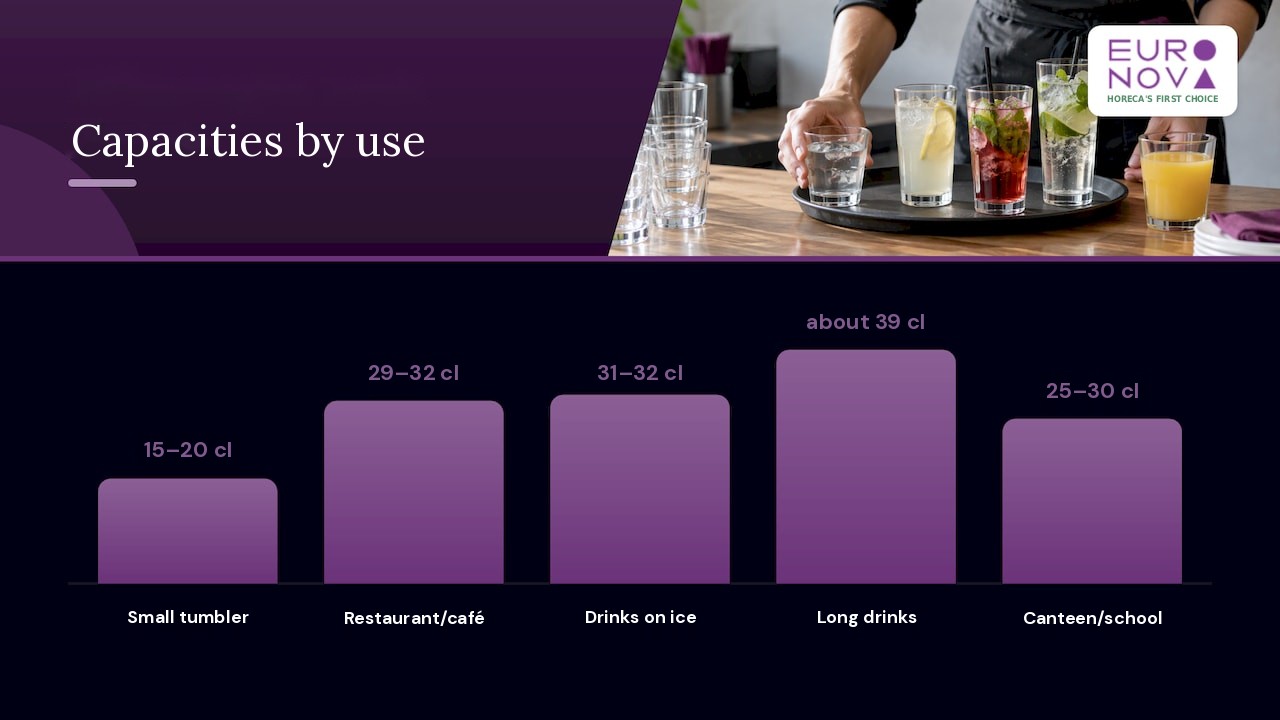
Shape and material: what matters
Fill lines when serving by measure
How many glasses you need
Area Assumption Glasses In service 40 seats, on average 1 glass per guest 40 In the wash cycle one full load being washed or drying 40 On the shelf as back-up weekend peak, water with coffee 30 Breakage reserve a few boxes in storage 18 Total 128 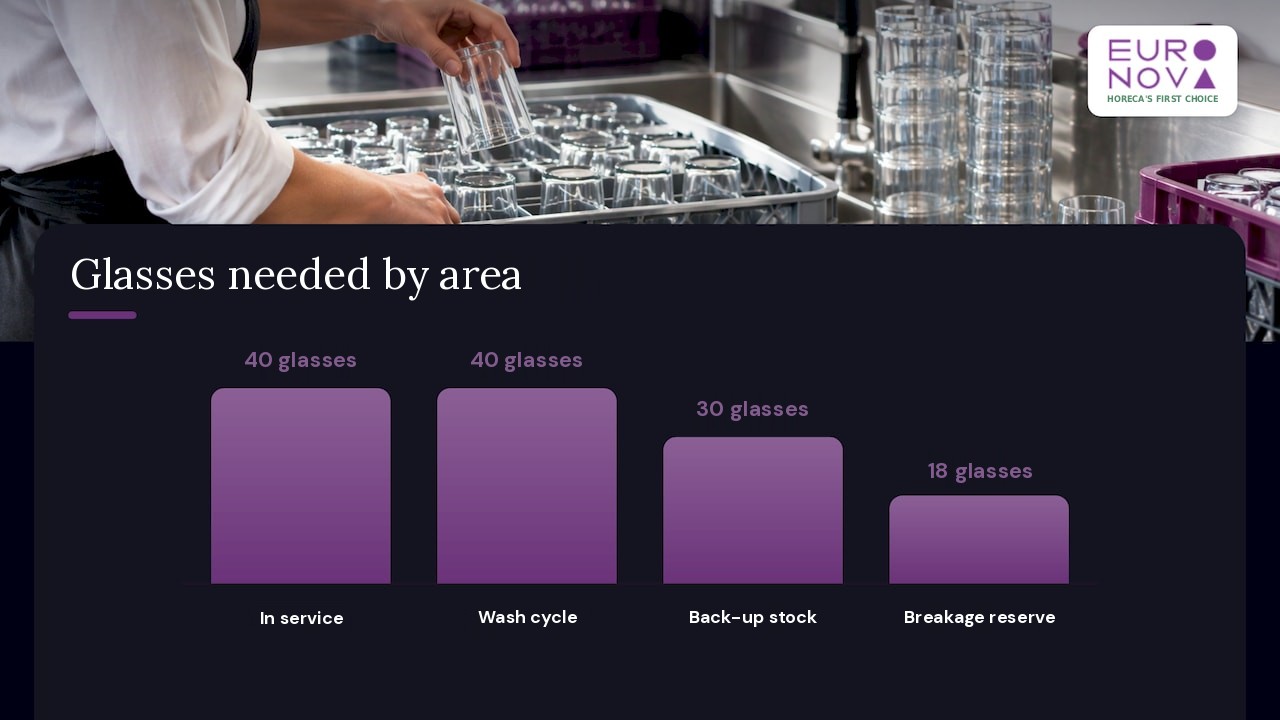
Washing, drying, stacking: the daily routine
Machine washing
Loading the rack correctly
Drying and cooling
Stacking and storage
Stackable glasses at Euronova

Our view: a glass that works with you
Frequently asked questions
Can I wash stackable glasses in a commercial dishwasher?
Why do glasses need to be dry and cool before stacking?
Do I need glasses with a fill line?
Which size is the most versatile?
Sources
Recommendations