Cast Iron Pans for Commercial Kitchens: Choosing, Using and Care
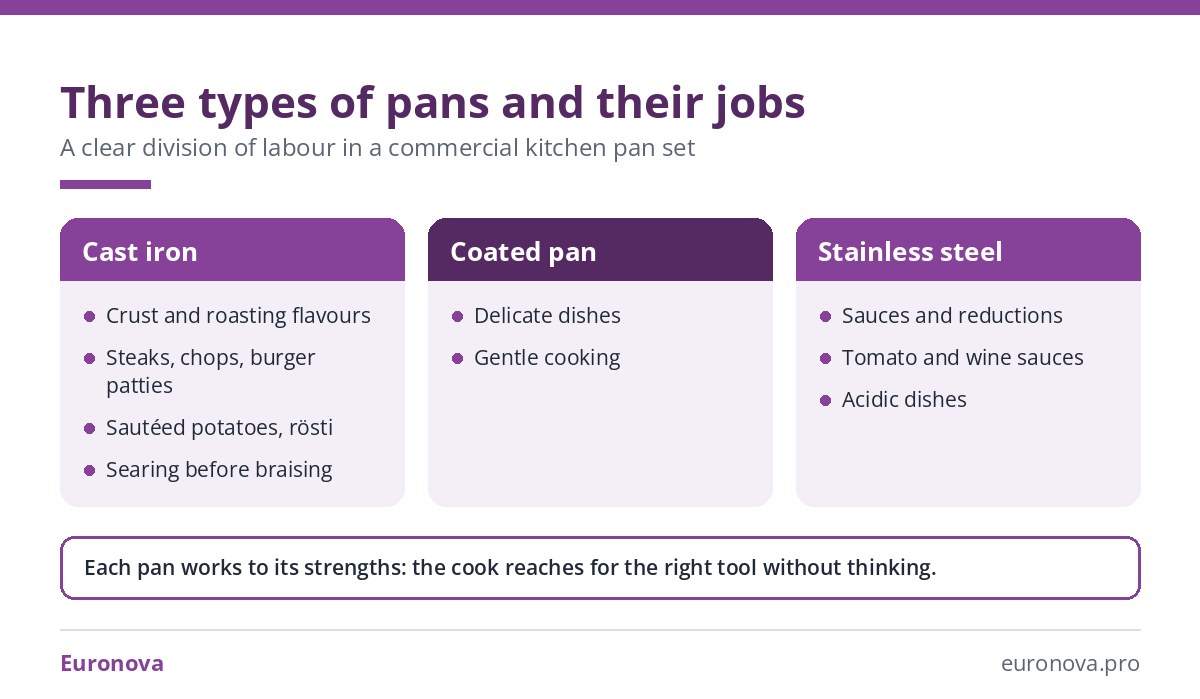
Cast iron pans belong in every commercial kitchen that cares about a good crust, roasting flavours and food served piping hot. They store heat like few other materials, last for decades and look good both at the pass and on the table. To pay off in daily service, three things must be in place: the right pan for the right task, a base that suits your range and hob zone, and a care routine that works even on the late shift. If you consider these points when buying and order your pans together with plates, cutlery and kitchen utensils from a specialist catering equipment supplier, you save time, shipping costs and the hassle of wrong purchases. The most important reason is heat retention. A heavy cast iron pan barely cools down when a cold piece of meat goes in. That is exactly what a good crust needs: the surface of the food should brown quickly rather than stew in its own juices. The Hamburg consumer advice centre describes cast iron as robust and heat-retaining and explicitly recommends it for high-heat searing. The second reason is service life. Cast iron has no coating that can wear off. Scratches from metal turners, high temperatures or moving from hob to oven don't harm it, as long as the pan is looked after. In a kitchen where coated pans have to be replaced regularly, this is a real cost factor. The third reason is seasoning. Once seasoned, iron pans develop a layer with a non-stick effect that improves with every use. The Berlin consumer advice centre therefore lists iron pans as particularly suitable for searing and sautéed potatoes. There is also an advantage you won't find on any data sheet: cast iron looks artisanal. A steak, a pan of sautéed potatoes or an oven dish served directly in a cast iron pan on a wooden board looks high-quality and stays warm to the last bite. Professional kitchens rarely work with just one type of pan. A clear division of tasks has proven itself: cast iron for everything that needs a crust and roasting flavours, coated pans for delicate dishes that need gentle cooking, and stainless steel for sauces and reductions. That way each pan works to its strengths, and the cook on the station reaches for the right tool without thinking. Cast iron is a frying pan, not an all-purpose pot. The Berlin consumer advice centre is clear about it: high-heat searing is its strength, while acidic sauces and long cooking of vegetables are unfavourable. For your menu, this means: Scrambled eggs work in a cast iron pan once the seasoning is established and the technique is right. A freshly seasoned pan is more sensitive at first, and eggs may stick. Three rules have proven themselves: heat the pan evenly to medium, use enough butter or oil and don't pour the mixture onto a cold spot. For hotel breakfast service, it pays to have a dedicated, well-seasoned pan just for eggs. It gets better with every use. A cast iron pan is a purchase for many years. All the more important to choose it to suit your kitchen. The following criteria decide whether the pan is used gladly every day or gathers dust on the shelf. When matching a pan to the hob, the base diameter counts, not the top rim. A pan with a 28 cm rim diameter has a noticeably smaller base. If it sits on a hob zone that is too large, the handle and rim heat up unnecessarily; on one that is too small, the rim stays cold. So before ordering, measure your hob zones and compare them with the base diameter in the product description. According to the consumer advice centre, a thick base helps store and evenly distribute heat. Cast iron is magnetic and therefore generally works well with induction. Even so, the manufacturer's stated compatibility is in the product description and should be checked before buying. On induction, a flat base is important. Heat the pan slowly there rather than switching straight to the highest setting, as large temperature jumps stress the material. In food service, a pan often travels from the hob into the oven or under the salamander. For that it needs a heat-resistant handle made of cast iron or stainless steel. Wooden or plastic handles are a no-go in the oven. A stainless steel stay-cool handle stays comfortable to hold for longer on the hob, but it heats up in the oven too. So pan holders or handle covers belong at every station. Cast iron is heavy. A large pan with its contents can easily weigh several kilograms, and the Hamburg consumer advice centre lists weight as one of the points to consider with cast iron. For stations with a lot of tossing, smaller diameters with a long handle are suitable. Large pans over 28 cm should have a helper handle so they can be carried safely with both hands. That protects wrists during a long service. Untreated cast iron must be seasoned before first use. Many pans now come pre-seasoned, i.e. with a factory-baked layer. For these, the manufacturer's care instructions apply. For kitchens with no time for the seasoning ritual, a pre-seasoned pan is the more practical choice. In food service, cast iron comes in far more versions than for home use. The most common types and their typical uses: For service, the combination is what counts. A serving pan with a steak looks particularly upmarket next to a large, calm plate for the sides, such as the Gourmet Sepia 30 cm flat plate. For mise en place at the station, gastronorm (GN) containers keep prepared ingredients to hand so a hot pan never has to wait. Caring for cast iron is no magic, but the team has to master it. Ideally, a short instruction sheet hangs by the dishwashing station, because most damage happens there, not on the hob. Untreated cast iron needs a base seasoning. The method: Use plenty of fat for the first few uses, for example sautéed potatoes or meat. That's how the seasoning builds up fastest. Pre-seasoned pans usually don't need seasoning; the manufacturer's instructions are decisive. For removing stubborn residue, the robust scrapers and brushes in our kitchen utensils range are ideal. Acidic dishes such as tomato sauce, wine sauces or dishes with lots of vinegar or lemon should not be prepared in iron pans. The Berlin consumer advice centre explains that acids attack the material, which can cause heavy metals to pass into the food. For the kitchen, this means: a quick deglaze with a splash of wine at the end is not critical if the sauce goes straight into a stainless steel pot. Long simmering in a cast iron pan, however, is. It is equally unfavourable to leave finished dishes standing in the pan for hours. For storage, they belong in suitable containers. Small rust spots are no reason to throw a pan out. Remove the rust with a brush or steel wool, clean the pan, dry it and season it again. It is then fully usable again. This is exactly where it beats coated pans: cast iron can be restored again and again. Not every venue needs the same equipment. A few examples from typical kitchens: A cast iron pan rarely comes alone. If you are equipping a searing station from scratch, you will usually also need turners, scrapers, GN containers, plates for the pass and chef's clothing for the team. At Euronova you will find cookware, kitchen utensils, porcelain, cutlery and food storage and transport products for the professional kitchen in one online shop. That way you can combine your pans directly with everything else your station still needs. Browse the Euronova range We see cast iron as one of the most honest tools in a professional kitchen. It needs no coating, no gentle handling of the turner and it forgives high temperatures. What it does demand is a good decision at purchase and a routine the whole team knows. That's why we advise businesses not to buy pans in isolation but to think from the workstation: which hob zones are available, which dishes go over this station, how does the food reach the guest? If you plan this way, you order the cast iron pan together with the matching plate, scraper and mise en place container. With our expert articles, multilingual product catalogues and European language versions of our shop, we want to make exactly this planning easier, so professional buyers quickly find what their kitchen really needs. Rok Because cast iron stores heat extremely well and barely cools down when cold food goes in. This gives an even crust on meat, fish and sautéed potatoes. On top of that comes a long service life with no coating to wear out, and the option of serving straight from the pan. Yes, with a well-established seasoning, medium heat and enough fat, scrambled eggs work without problems. In freshly seasoned pans, eggs may stick at first. For breakfast service, it is therefore worth having a dedicated pan used only for eggs. Don't simmer acidic dishes such as tomato sauce in it for long. Don't quench a hot pan with cold water and don't put it in the dishwasher. After washing, dry it thoroughly and oil it lightly, otherwise it will rust. Cast iron is magnetic and therefore generally suitable for induction. What matters is a flat base and the manufacturer's approval in the product description. On induction, heat up gradually to protect the material.Cast Iron Pans for Commercial Kitchens: Choosing, Using and Care

In brief
Contents
Why professional kitchens rely on cast iron
Division of labour in your pan set
What to cook in a cast iron pan
Use
Suitability
Practical tip
Steaks, chops, burger patties
very good
preheat the pan fully, turn the meat only once it releases
Sautéed potatoes, rösti
very good
enough fat, don't overload the pan
Braised dishes with initial searing
good
sear, then finish in the oven; choose an oven-safe handle
Fish fillets with skin
good
well-seasoned pan, pat the skin dry
Pancakes, blinis, fried eggs
good with good seasoning
even medium heat, don't skimp on fat
Tomato sauce, wine sauces, vinegar reductions
unsuitable
prepare in stainless steel
Long cooking of vegetables in liquid
unsuitable
use a pot or stainless steel pan
Scrambled eggs and egg dishes
What to look for when buying
Base diameter and hob zone
Type of hob: gas, ceramic, induction
Handle and oven suitability
Weight and handling
Untreated or pre-seasoned cast iron
Sizes and shapes for kitchen and service
Seasoning, cleaning, care: a routine for your kitchen
Seasoning before first use
Cleaning after service
What not to cook in a cast iron pan
Removing rust and dull spots
Cast iron in everyday use across different venues
Order together instead of searching piece by piece

Our view as a catering equipment supplier
FAQ
Why do restaurants use cast iron pans?
Can I make scrambled eggs in a cast iron pan?
What should you not do with a cast iron pan?
Do cast iron pans work on induction?
Sources